
The Solana ecosystem has matured into a high-performance environment where liquidity protocols must adapt to rapid price movements and high transaction throughput. At the center of this infrastructure sits the meteora crypto exchange, a decentralized protocol that has shifted the paradigm of how automated market makers (AMMs) operate. Originally evolving from the Mercurial Finance project, Meteora has established itself as a foundational “liquidity layer” rather than just another swapping interface. This review examines the technical architecture, fee structures, and the overall experience of using the protocol in the current market.
Meteora Platform Overview
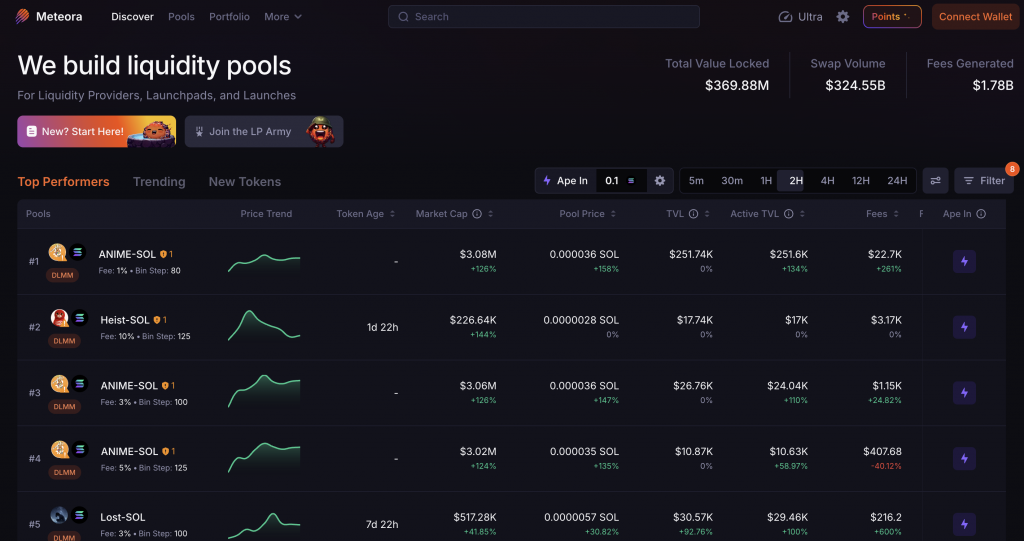
Meteora is not a traditional exchange in the centralized sense; it is a decentralized liquidity protocol built natively on Solana. Its primary objective is to solve the problem of “lazy liquidity”—assets that sit in pools without being efficiently utilized for trades. By creating a modular system that includes Dynamic Liquidity Market Makers (DLMM), dynamic vaults, and specialized launch tools, the meteora crypto project serves both retail traders seeking low slippage and professional liquidity providers (LPs) seeking optimized yields.
The platform distinguishes itself by integrating idle capital into lending protocols, ensuring that even assets not currently being swapped are generating value. This dual-yield approach has made it a key partner for major Solana aggregators like Jupiter, which often route significant volume through Meteora’s pools to secure the best pricing for users.
What is Meteora Crypto?
In the decentralized finance (DeFi) space, meteora crypto represents a move away from static liquidity models. Traditional AMMs often spread liquidity across an infinite price range, which leads to high slippage for traders and inefficient use of capital for LPs. The meteora crypto exchange implements a concentrated liquidity model that allows users to provide assets within specific price “bins.”
This architecture ensures that trades occurring within a specific bin experience zero slippage, as the price is fixed until the liquidity in that bin is exhausted. This precision allows the protocol to handle high-volume trading with much less total capital compared to older V2-style models. It is an infrastructure designed specifically for the high-speed, low-cost environment of Solana, where precision and efficiency are paramount.
Meteora Project: Key Features
The core of the meteora crypto project lies in its three primary product pillars: DLMM, Dynamic Vaults, and Alpha Vaults. Each serves a specific function in the broader Solana ecosystem.
1. Dynamic Liquidity Market Maker (DLMM)
DLMM is the flagship technology of the protocol. It organizes liquidity into discrete “price bins.” Unlike the continuous curves found in Uniswap V3, DLMM uses a discrete bin system where each bin represents a specific price point.
- Zero Slippage: Swaps that stay within a single bin have no price impact.
- Bin Steps: LPs can choose the distance between bins, allowing for finer control over volatility.
- Strategies: The platform offers pre-set strategies such as “Spot” (uniform distribution), “Curve” (concentrated near market price), and “Bid-Ask” (concentrated at the edges of a range).
2. Dynamic Vaults
To maximize capital efficiency, Meteora utilizes Dynamic Vaults. When assets in an AMM pool are not being used for swaps, the protocol automatically lends them out to vetted lending platforms like Kamino or Solend. This allows LPs to earn trading fees and lending interest simultaneously. The system monitors these lending rates in real-time and rebalances capital every minute to capture the highest available yield.
3. Alpha Vaults and Launch Tools
For new token launches, the protocol provides Alpha Vaults and Dynamic Bonding Curves. These tools are designed to prevent bot “sniping” and front-running, which often plague decentralized launches. By locking liquidity and using a structured price curve, the meteora crypto project aims to create a more equitable distribution for community members during the critical early minutes of a token’s life.
User Interface and Experience
The interface of the meteora crypto exchange focuses on transparency and data density. Unlike retail-focused apps that hide technical details, the Meteora dashboard provides granular views of pool performance, bin utilization, and P&L (Profit and Loss) tracking.
For liquidity providers, the platform offers “one-click” entry through a feature known as “Zap,” which allows users to enter a liquidity position using just one asset, automatically swapping a portion into the required pair. The UI also highlights “Comet Points,” a loyalty system that tracks user engagement and liquidity provision, providing a clear visual representation of a user’s standing within the ecosystem. While the interface is highly functional, it assumes a certain level of DeFi literacy, prioritizing deep analytics over extreme simplification.
Fees and Pricing
Fee structures on Meteora are dynamic and designed to protect liquidity providers from impermanent loss during high volatility. The total fee for a swap consists of two components:
- Base Fee: A fixed percentage set by the pool creator, typically ranging from 0.01% to 0.20% for major pairs.
- Variable Fee: This fee adjusts automatically based on market conditions. If the price moves rapidly across multiple bins, the variable fee increases to compensate LPs for the increased risk. Conversely, in stable markets, the fee decreases to encourage higher trading volume.
This volatility-adjusted mechanism ensures that the protocol remains competitive during calm periods while remaining sustainable for LPs during turbulent market events. It is a data-driven approach that aligns the interests of traders and providers more effectively than fixed-fee models.
Security, Compliance, and Trust
Security is a high priority for the protocol, given its role as a liquidity backbone. Meteora’s smart contracts have undergone multiple audits by leading firms such as OtterSec and Zellic. The code is open-source, allowing for continuous community review.
However, users should be aware of the inherent risks in decentralized finance. While audits reduce the likelihood of smart contract vulnerabilities, they do not eliminate them entirely. Furthermore, the protocol has faced scrutiny in the past regarding sentiment and trust, including investigations into memecoin launch practices and fluctuations in token sentiment. Unlike centralized entities, Meteora is a self-custody protocol, meaning the user is entirely responsible for the security of their private keys and the management of their assets.
Asset Selection and Regional Availability
As a decentralized protocol on Solana, Meteora supports a vast array of assets, ranging from blue-chip tokens like SOL, BTC, and ETH (in their wrapped forms) to a wide variety of ecosystem-specific tokens and stablecoins. Because it is a permissionless protocol, it is globally accessible to anyone with a compatible Solana wallet.
However, users must be aware that the availability of specific assets within the protocol does not exempt them from local regulations. Certain tokens—particularly those involving Real-World Assets (RWAs) or specific structured products—may carry their own jurisdictional restrictions. Users should ensure they are acting in accordance with their local laws when engaging with decentralized assets.
Meteora Crypto App Experience
While there is no standalone native mobile application available in traditional app stores, the meteora crypto app experience is delivered via a highly optimized, mobile-responsive web interface. Users can connect mobile-native wallets like Phantom or Solflare directly through their mobile browsers to manage their positions on the go.
The meteora exchange app interface on mobile retains most of the desktop functionality, including the ability to monitor DLMM bins, adjust liquidity ranges, and claim earned fees. The “Comet Points” dashboard is also fully accessible, allowing users to track their incentives without needing a desktop computer. The emphasis is on a “mobile-first” web experience that avoids the regulatory hurdles of app store distribution while maintaining high performance on Solana’s low-latency network.
Meteora Crypto Exchange Pros & Cons
Pros:
- High Capital Efficiency: DLMM allows for 4x-5x higher fee generation per dollar of liquidity compared to standard AMMs.
- Zero-Slippage Swaps: Trading within active price bins provides institutional-grade execution.
- Dual-Yield Mechanics: Earning lending interest on idle liquidity provides a significant advantage for long-term LPs.
- Fair Launch Tools: Alpha Vaults help mitigate bot interference during new token releases.
Cons:
- Complexity: The bin-based system requires a deeper understanding of price ranges than traditional 50/50 pools.
- Impermanent Loss Risk: Concentrating liquidity into narrow bins increases the risk of being “priced out” of a range quickly.
- Network Dependence: The protocol’s performance is strictly tied to the stability and congestion levels of the Solana network.
- Self-Custody Responsibility: No “forgot password” feature or customer support to assist with lost access.
Meteora Alternatives: How CEX.IO Compares
When comparing a decentralized protocol like Meteora to a centralized, regulated exchange like CEX.IO, the primary trade-off is between technical flexibility and security/simplicity.
Meteora is designed for the “power user” who wants to manage complex liquidity strategies, participate in early-stage token launches, and interact directly with the Solana blockchain. It offers tools for yield optimization that are generally not available on centralized platforms.
In contrast, CEX.IO provides a vetted and ethical environment where user safety and regulatory compliance are at the forefront. While Meteora requires users to manage their own private keys and navigate complex DeFi mechanics, CEX.IO offers a more straightforward, streamlined path for individuals to explore the digital asset market.
Why CEX.IO Could Be a Better Option
For many participants, the technical barriers and risks associated with decentralized liquidity provision may outweigh the potential rewards. This is where CEX.IO offers a distinct advantage.
- Streamlined Experience: Features like “Instant Buy” and a user-friendly Spot Trading interface make it much simpler for users to build a portfolio without needing to understand “price bins” or “dynamic vaults.”
- Reliable Support: Unlike a DAO-governed protocol where assistance is limited to community forums, CEX.IO provides dedicated customer support to help users with account management and technical issues.
- Vetted Security: While DeFi protocols are subject to smart contract risks, CEX.IO implements institutional-grade security measures and a comprehensive risk management framework to protect user assets.
For users who prioritize a trusted environment and a simplified experience, CEX.IO provides a legacy of safety and transparency that makes it a highly viable alternative to the more complex DeFi ecosystem.

Final Verdict: Is Meteora Crypto Exchange Right for You?
The meteora crypto exchange is a powerful tool for those who are deeply embedded in the Solana ecosystem and possess the technical knowledge to manage concentrated liquidity. Its DLMM technology and dynamic fee models represent the cutting edge of decentralized finance, offering efficiency and yield potential that set a high bar for the industry.
However, it is not a “set-and-forget” platform. Success on Meteora requires active management and an understanding of how volatility impacts price bins. For those who find these mechanics overwhelming or who prefer the safety net of a regulated, professional exchange, CEX.IO offers a more straightforward and secure pathway to engaging with digital assets. Whether you choose the path of decentralized optimization or regulated simplicity, understanding the mechanics of both is key to navigating the modern financial landscape.
FAQ
What does Meteora crypto do?
Meteora serves as a decentralized liquidity protocol on the Solana blockchain. It provides the infrastructure for low-slippage trading and high-efficiency liquidity provision through its DLMM and dynamic vault systems.
Can you use Meteora in the USA?
As a decentralized protocol, it is accessible globally via Solana-compatible wallets. However, users in the U.S. should remain aware of local regulations regarding the specific tokens they choose to trade or provide liquidity for.
Does Meteora have a coin?
Yes, the project utilizes the MET token. It is used for governance within the Meteora DAO, fee sharing for stakers, and as an incentive for liquidity providers through the platform’s rewards programs.
Why is Meteora so popular?
The popularity of the meteora crypto project stems from its high capital efficiency. LPs can earn significantly more in fees by concentrating their liquidity into specific price bins, while traders benefit from zero-slippage execution.
What are the benefits of using Meteora?
The primary benefits include higher fee-earning potential for LPs, dual-yield from lending and trading, and access to advanced tools for fair token launches that protect against bot manipulation.
Who Meteora Fits Best?
The meteora crypto app experience is best suited for experienced DeFi users, technical liquidity providers, and traders who are comfortable with self-custody and active management of their positions.
Is meteora exchange safe?
The protocol has been audited by respected firms like OtterSec and Zellic. While it implements robust security measures, it remains subject to the smart contract risks and market volatility inherent in all decentralized finance protocols.
How trustworthy is meteora?
Meteora is viewed as a foundational part of the Solana ecosystem and maintains a high level of transparency through open-source code and active community governance. However, users should always perform their own research regarding market sentiment and protocol updates.
Does Meteora have a wallet?
No, Meteora is a protocol, not a wallet provider. You must use a third-party Solana wallet, such as Phantom or Solflare, to interact with the platform.