
A cold wallet keeps your private keys offline. The wallet signs transactions but cannot sell crypto on its own. To turn those coins into cash, you move the crypto to a platform that handles fiat, sell there, and withdraw to your bank. Three steps — transfer, sell, withdraw.
This guide covers the full path for hardware wallets like Ledger and Trezor, for paper wallets, and for metal backups. Active work takes roughly 30 minutes. Blockchain confirmation and fiat settlement add wait time.
What a cold wallet does (and does not do)
A cold wallet stores the private keys that prove ownership of crypto on a blockchain. The coins themselves live on the blockchain, not on the device. When you want to send crypto, the wallet signs a transaction with your key. The network then updates the public ledger and transfers ownership.
Cold wallets hold no fiat. They have no order book and no way to execute a sell order. To convert crypto to cash, you need a platform with both crypto trading and fiat withdrawals.
Hardware wallets include Ledger Nano, Trezor Safe, and Tangem. Paper wallets store keys as printed QR codes. Metal wallets etch the seed phrase into steel so the backup survives fire and water.
Step 1 — Pick your destination platform
Four main paths handle a cold-wallet cash-out:
- Centralized exchange — the most common route. Good liquidity, clear withdrawal flows, fiat support.
- Peer-to-peer marketplace — you sell directly to another user. More payment methods, more counterparty risk to manage.
- Bitcoin ATM — you send crypto to the machine’s address and collect cash on the spot. Fees tend to run higher.
- OTC desk — suited to transactions above $50,000. You get a single quote and avoid moving the market.
A regulated centralized exchange gives the cleanest path for most users. Check that the platform supports your country, your coin, and a withdrawal method your bank accepts.
Step 2 — Transfer crypto from cold wallet to exchange
Open the wallet companion app. Ledger uses Ledger Live; Trezor uses Trezor Suite. Connect the device over USB or Bluetooth and enter your PIN.
On the exchange, open the deposit screen and pick the exact coin you plan to send. The exchange generates a deposit address and shows the network you must use. Bitcoin runs on its own network. Ethereum and ERC-20 tokens run on Ethereum. USDT exists on Ethereum, Tron, Solana, and other chains. Picking the wrong network can lose the funds.
Copy the address. In the wallet app, start a send transaction. Paste the address. Enter a small test amount — five to twenty dollars works well. Confirm on the device. Wait for the exchange to credit the deposit.
Once the test arrives, send the rest. Large transactions confirm at the same speed as small ones, and watching a test clear first removes doubt about the address.
Step 3 — Sell crypto for fiat
After the exchange credits your deposit, open the trading section. Two main order types cover most cases:
- Market order — sells at the current best available price. Fast and simple, but you accept whatever spread the order book shows.
- Limit order — you set a target price. The trade runs when the market reaches that price, or sits in the book until someone fills it.
Pick a fiat pair your bank accepts. Euro bank account → trade to EUR. US bank account → trade to USD. Confirm the trade. The fiat balance appears in your exchange wallet within seconds.
Step 4 — Withdraw fiat to your bank
Open the withdrawal screen and pick a method based on country:
- SEPA — euro transfers across the EEA. One business day.
- SWIFT — international wires. Two to five business days.
- ACH — USD in the US. One to three business days.
- Domestic Wire — USD in the US, typically same day.
- Faster Payments — GBP in the UK. Seconds to minutes.
- Card withdrawal — Visa or Mastercard. Minutes where supported.
The name on the bank account must match the name on the exchange account. Exchanges reject third-party transfers and may return the funds with a fee deducted.
Alternative routes
A Bitcoin ATM cuts steps. You scan the ATM’s QR code, send crypto from your cold wallet, and collect cash. Fees often run 8% to 15%. You need to travel to the machine.
P2P trading on a regulated platform matches you with a buyer. You pick the payment method — bank transfer, mobile payment, sometimes cash in person. The platform holds the crypto in escrow until both sides confirm. P2P works well when you want payment methods outside the standard fiat rails.
OTC desks handle very large sales. You get a private quote, the trade executes off-exchange, and settlement happens by wire. Most OTC desks set a minimum ticket of $50,000 to $100,000.
Common mistakes that lose funds
Wrong network is the top cause of lost crypto. Sending BNB on Ethereum to a BEP-20 address can destroy the transfer. Always match the network to the receiving address.
Skipping the test transfer saves ten minutes and can cost the full balance. Run a test every time.
Ignoring memo or destination tag fields — XRP, XLM, EOS, and several exchange addresses need a memo. Without it, the funds arrive at the exchange but do not credit your account.
Address typos — one wrong character sends funds to a valid but different address. The blockchain has no reverse button.
Taxes and record-keeping
Selling crypto typically creates a taxable event. The amount depends on your profit or loss, your holding period, and local rules. Keep records of cost basis, sale price, every fee, exact dates, and the wallet and exchange addresses.
Export the exchange transaction history as a CSV after every sale. Crypto tax software can also import directly from wallets and exchanges. This article covers general information and does not provide tax advice. A local tax professional can confirm rules for your situation.
About CEX.IO
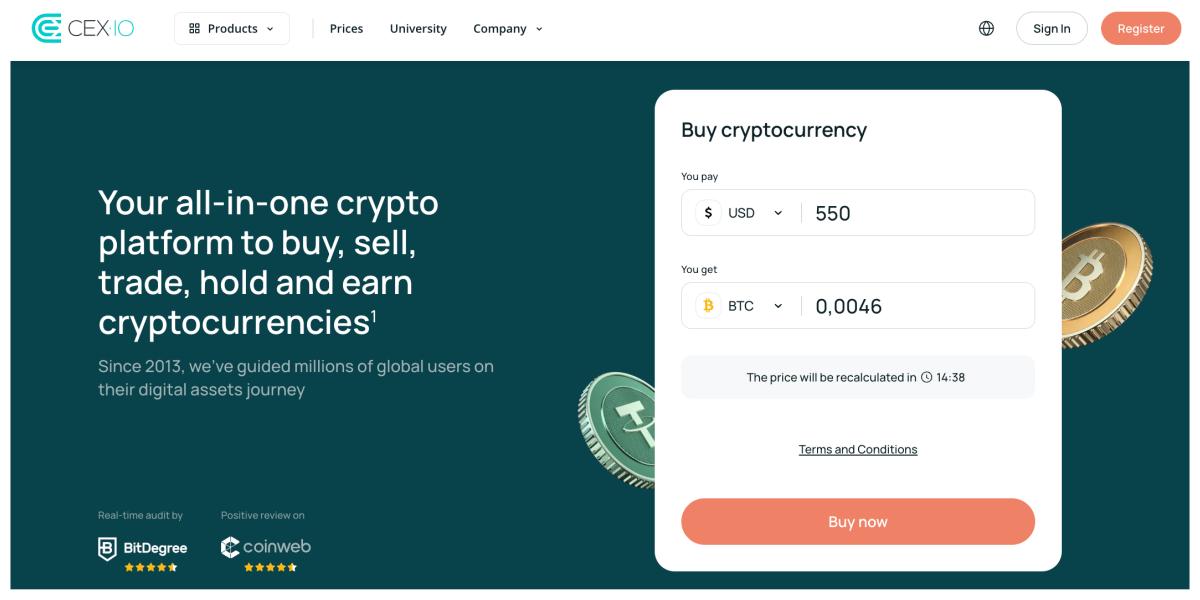
CEX.IO launched in 2013 with a mission to support global financial inclusion through the adoption of cryptocurrency and blockchain technology. As one of the most tenured market participants, CEX.IO runs an intuitive ecosystem of solutions built with user safety at the core. Customers can trade, store, transfer, and earn digital assets on the platform. More than 15 million registered users globally use CEX.IO every day across retail, enterprise, and institutional needs.
CEX.IO is registered with FinCEN in jurisdictions where it holds a license to operate as a Money Service Business. The company follows local regulations in the U.S., Europe, and other countries where it operates.
How to sell crypto from a cold wallet on CEX.IO
CEX.IO supports the full cold-wallet cash-out path end to end:
- Create a CEX.IO account and complete identity verification.
- Open the Wallet section, pick the coin you plan to deposit, copy the deposit address, and note the network shown on screen.
- From your cold-wallet app, send a small test amount to the CEX.IO address. Confirm that the deposit credits your CEX.IO account.
- Send the remaining balance.
- Once the coins arrive, use Instant Sell for a one-click conversion, use Spot Trading for more price control, or use Convert to swap one asset into another.
- Move to fiat withdrawal — SEPA for EEA users, Faster Payments or Online Banking for UK users, Domestic Wire for US users, or card withdrawal where your country supports it.
The availability of the product, feature, or asset on the CEX.IO platform is subject to jurisdictional limitations.
FAQ
Can you sell crypto directly from a cold wallet?
No. A cold wallet only signs transactions. Selling needs a platform with a trading engine and a fiat balance — an exchange, a P2P marketplace, or an OTC desk.
How long does it take to cash out crypto from a hardware wallet?
Transfer times run from minutes on fast networks like Solana to about an hour on Bitcoin. Fiat withdrawal adds one to three business days for most methods.
What is the safest way to cash out from cold storage?
A regulated centralized exchange with full identity verification adds legal protection and a clear dispute path. Start with a small test transfer before moving the full amount.
Do I pay tax when I cash out from a cold wallet?
Most countries tax the sale event, not the transfer itself. Keep records of cost basis, sale price, and fees. A local tax professional can confirm the rules for your country.
Can I use a Bitcoin ATM with a cold wallet?
Yes. Scan the ATM’s QR code, send the crypto from the cold wallet, and collect cash. Fees tend to run higher than on a regulated exchange.
Risk disclaimer
The value of digital and virtual currencies is derived from supply and demand in the global marketplace, which can rise or fall independently of any fiat or government currency. Holding digital and virtual currencies carries exchange rate and other types of risk. Transactions in virtual currency are irrevocable, and losses from fraudulent or accidental transactions may result in the loss of your money with no recourse. Please refer to the Terms of Use for more details.