
Educational Notice: This article is provided purely for informational and educational purposes. It does not constitute financial, investment, or legal advice, nor does it represent an offer, solicitation, or recommendation to trade digital assets or register with CEX.IO.
Choosing a crypto exchange in Europe carries weight in 2026, because the EU’s Markets in Crypto-Assets regulation (MiCA) has redefined what compliant trading looks like across the bloc. MiCA sets EU-wide standards on fund segregation, cybersecurity, and consumer protection, and platforms serving European users must hold a Crypto-Asset Service Provider (CASP) authorisation or operate under official transitional provisions. Crypto is a high-risk, volatile asset, and no regulatory status removes that risk. This guide reviews four platforms serving European users: Kraken, Coinbase, Bitpanda, and OKX. It compares regulatory standing, SEPA support, fees, and coin selection.
Crypto Exchanges in Europe: Summary
| Exchange | Suited For | MiCA / Regulatory Status | Entry-Level Fees | SEPA Support | EEA Availability |
|---|---|---|---|---|---|
| Kraken | Experienced traders | MiCA CASP via Ireland | ~0.26% maker / ~0.16% taker | Yes | All EEA |
| Coinbase | New users | Full MiCA CASP via CSSF Luxembourg (June 2025) | 0.60% taker / 0.40% maker | Yes | All EEA |
| Bitpanda | Multi-asset European portfolios | MiCA authorised in Austria, Germany, Malta | Varies by asset | Yes | Europe-focused |
| OKX | Altcoin variety, DeFi | MiCA CASP via Malta MFSA | Low | Yes | 28+ EEA countries |
Kraken
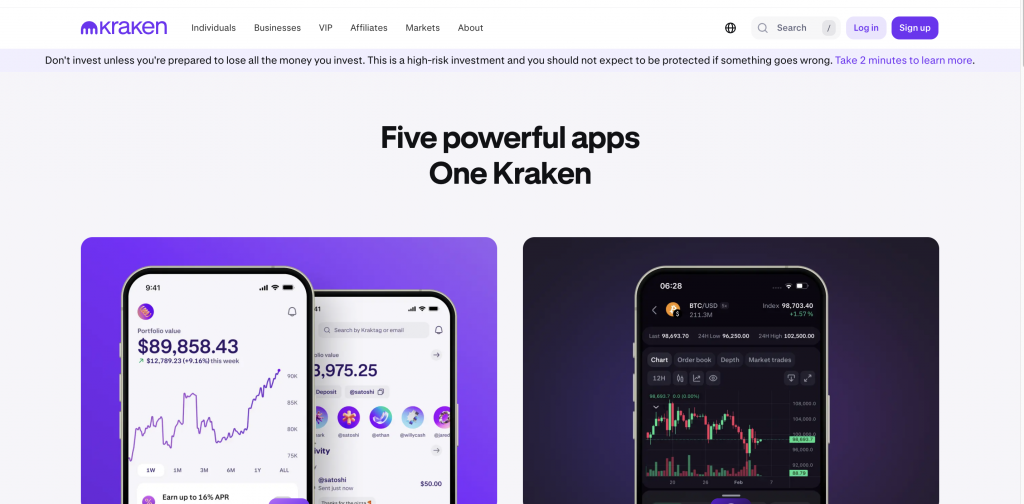
Kraken launched in 2011 and introduced an early BTC/EUR trading pair in 2013, which makes it one of the longer-standing crypto exchanges serving European users. The platform holds MiCA CASP authorisation via Ireland, alongside more than 50 licences globally. European traders access 450+ cryptocurrencies, free SEPA deposits, OTC trading, staking, and proof-of-reserves audits.
Key Features
Kraken’s feature set is aimed at experienced traders who need breadth and regulatory documentation. Its 450+ coin offering is among the widest in this comparison, ahead of Coinbase (200+), and free SEPA deposits reduce fiat onboarding costs relative to exchanges that charge deposit fees. Spot and futures trading are both available, with margin leverage up to 10x for eligible users who complete the required knowledge assessment. Kraken’s proof-of-reserves programme gives European users independently verifiable confirmation that funds are held 1:1. OTC services allow large-volume buyers to execute trades off-book, an option unavailable on Coinbase’s standard European offering. Kraken does not issue a crypto debit card in the EEA.
Kraken Pros and Cons
Kraken offers deep liquidity, documented regulatory credentials, and a broad coin list. Its interface takes time to learn, and certain convenience features are absent for European users.
Pros:
- MiCA CASP authorised via Ireland, one of the first global exchanges with EU-wide licensing
- 450+ cryptocurrencies, among the widest selections in this comparison
- Proof-of-reserves audits for independent fund verification
- OTC desk for high-volume trades
- Staking available on eligible assets
- Active since 2011 [verify security record]
Cons:
- No crypto debit card in the EEA
- Margin trading requires completing an eligibility knowledge assessment (MiFID II requirement)
- Interface has a steeper learning curve than Coinbase or Bitpanda
- Taker fees (0.16%) are the lowest in this group, but maker fees (0.26%) are higher than some peers
Why Choose Kraken
Kraken suits European traders who want a long-established MiCA-authorised platform and a wide coin catalogue. Its 450+ assets cover major cryptocurrencies, mid-cap altcoins, and niche tokens unavailable on Coinbase’s 200+ list. Free SEPA deposits make it cost-efficient for EUR-denominated purchases, removing a friction point that fee-charging alternatives carry. Kraken suits traders who want staking, OTC desks, and proof-of-reserves reporting as standard. Its 50+ global licences, anchored by MiCA CASP via Ireland, indicate that the platform operates within EU law.
Coinbase
Coinbase obtained full MiCA CASP authorisation, granted by the CSSF in Luxembourg in June 2025, and also holds BaFin registration in Germany. That regulatory standing makes it a reference point for European users who want confirmation that an exchange operates within EU law. The platform lists 200+ cryptocurrencies and supports SEPA deposits across the EEA, with an interface aimed at new users.
Key Features
Coinbase’s full MiCA CASP authorisation is its main point on regulatory standing. Its interface is aimed at new users, where Kraken or OKX present more advanced tools. SEPA support covers EUR funding across EEA member states. The 200+ coin listing covers major assets but is smaller than Kraken (450+) and OKX (500+) for altcoin traders. Taker fees of 0.60% are the highest in this comparison, above Kraken’s 0.16% taker fee. Coinbase does not offer a crypto debit card in Europe. For Bitcoin or Ethereum purchases with full MiCA authorisation, Coinbase provides a documented option.
Coinbase Pros and Cons
Coinbase’s position in this comparison rests on full MiCA authorisation and an interface aimed at new users. Its fees and feature set are less suited to experienced European traders.
Pros:
- Full MiCA CASP authorisation via CSSF Luxembourg (June 2025)
- BaFin registered in Germany for additional local regulatory coverage
- Interface aimed at new users
- SEPA support across the EEA
- Documented compliance and security practices
- 200+ cryptocurrencies covering major assets
Cons:
- Highest fees in this comparison, 0.60% taker and 0.40% maker
- No crypto debit card in Europe
- Smallest coin list (200+), fewer altcoin options than Kraken or OKX
- Less suited to experienced traders needing advanced tools or high leverage
Why Choose Coinbase
European users who place regulatory documentation above other criteria may consider Coinbase. Full MiCA CASP authorisation from CSSF Luxembourg means it operates under EU authorisation without transitional-period dependency. Its interface is aimed at first-time users, and buying Bitcoin or Ethereum involves fewer steps than on Kraken or OKX. The trade-offs are cost and feature depth. At 0.60% taker fees, frequent traders pay more per transaction than on Kraken (0.16%) . Users who need higher leverage or a wider altcoin catalogue can look at other platforms in this review. Coinbase suits European users who prioritise full MiCA authorisation and a simpler interface over cost efficiency or advanced tools.
Bitpanda
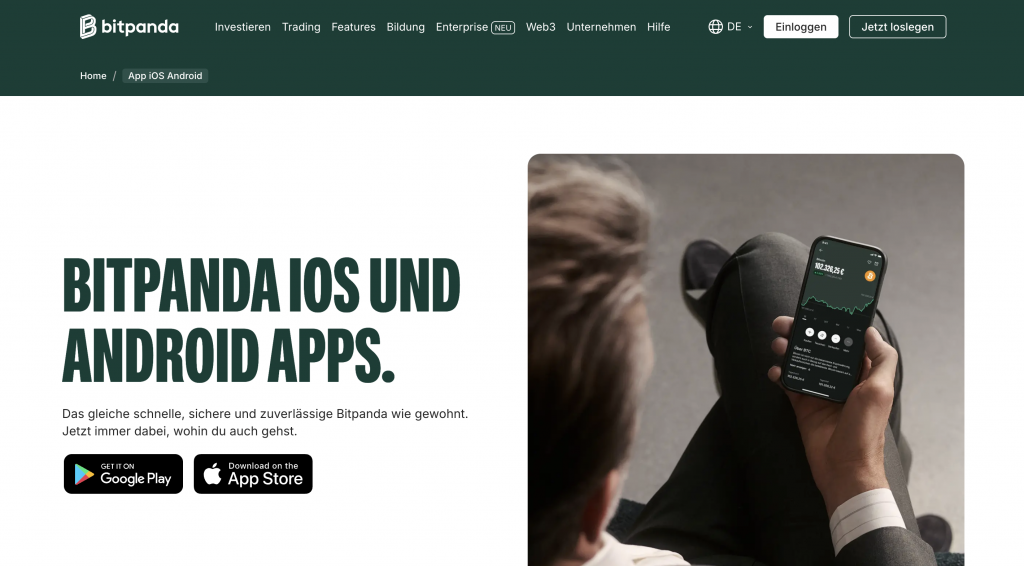
Bitpanda launched in Vienna in 2014 and built its business around the European market. The platform holds MiCA authorisation in Austria, Germany, and Malta, along with 16 European licences covering most EEA member states. Bitpanda lists 650+ assets spanning cryptocurrencies, stocks, ETFs, precious metals, and commodities, the broadest multi-asset selection in this comparison . The platform reports more than 6 million users across Europe .
Key Features
Bitpanda’s 650+ asset catalogue covers crypto, European and US stocks, ETFs, and precious metals through a single account. That breadth suits European investors who want diversified exposure without opening separate brokerage and crypto accounts. Savings-plan functionality lets users automate recurring purchases, a feature absent on Kraken and Coinbase. A Bitpanda debit card is available in supported European countries. MiCA authorisation across Austria, Germany, and Malta gives Bitpanda local regulatory coverage, while Coinbase’s CSSF Luxembourg authorisation carries broader single-passport reach. Fees vary by asset type and payment method; crypto-to-crypto fees are competitive, while fiat-funded purchases can carry higher spreads. Bitpanda’s trading tools are oriented to European retail investors; traders seeking high leverage or deep derivatives markets will find OKX more capable.
Bitpanda Pros and Cons
Bitpanda is oriented to European multi-asset investors. It is less competitive for pure crypto trading depth or global access.
Pros:
- 650+ assets, the widest selection in this comparison, including stocks, ETFs, and metals
- Built for European markets with local regulatory coverage
- MiCA authorised in Austria, Germany, and Malta; 16 European licences
- Savings plans for automated recurring purchases
- Debit card available in supported European countries
- 6M+ users with a long track record in the EU
- SEPA support
Cons:
- Primarily Europe-focused, less suited to non-EU or global traders
- Not available in all international markets
- Fees on fiat-funded crypto purchases can be higher than dedicated crypto exchanges
- Less depth in pure crypto trading tools than Kraken or OKX
Why Choose Bitpanda
European investors who want one platform for both crypto and traditional asset classes may consider Bitpanda. Holding Bitcoin, a listed stock, gold, and an ETF in a single regulated European account is a structural feature no other exchange in this review replicates. Savings plans allow users to automate weekly or monthly purchases of any asset, a practical tool for long-term investors who want systematic exposure without manual execution. Bitpanda’s 16 European licences and MiCA authorisation in three EU jurisdictions provide a regulatory foundation for retail and semi-professional investors in the EEA . Pure crypto traders who want deep altcoin markets, high leverage, or low per-trade fees will find Kraken or OKX better matched to those needs.
OKX
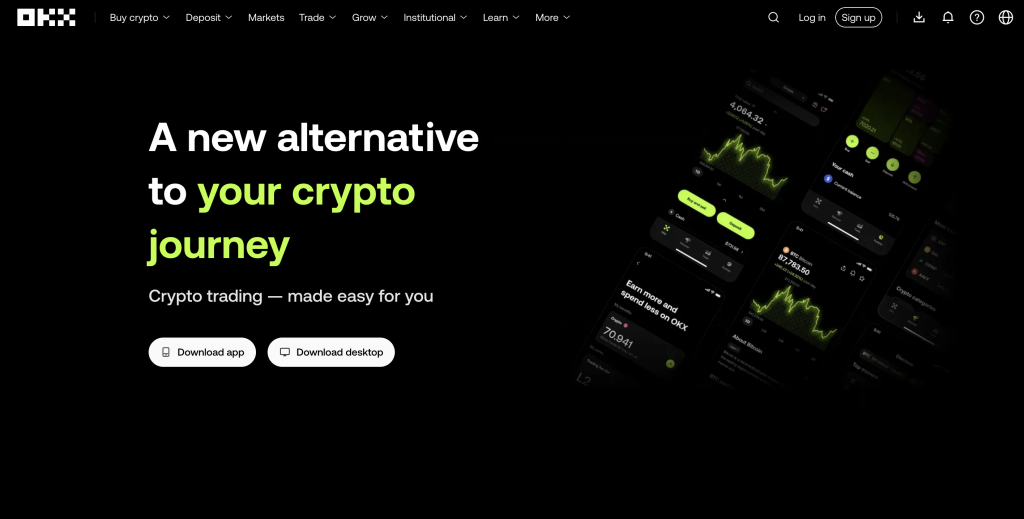
OKX obtained MiCA CASP authorisation via the Malta Financial Services Authority (MFSA). In February 2026, OKX added a Payment Institution licence . The platform lists 500+ cryptocurrencies, offers low trading fees, a native DEX and Web3 wallet, and a derivatives suite covering futures, options, and perpetual contracts.
Key Features
OKX’s MiCA CASP via Malta MFSA, combined with its February 2026 Payment Institution licence, gives it a broad European regulatory package . The 500+ coin listing covers major assets and the widest altcoin range in this comparison, ahead of Kraken (450+) and Coinbase (200+) . Trading fees are among the lowest in the market, which gives high-frequency traders a cost advantage over Kraken’s 0.26% maker fee or Coinbase’s 0.60% taker rate . The integrated DEX and Web3 wallet let users interact with DeFi protocols directly from their OKX account. Derivatives including futures, options, and perpetuals are available for European users who qualify under local regulations. OKX’s interface is feature-dense; new users will encounter a steeper learning curve than on Coinbase, and SEPA deposit flows are less streamlined for users who want simple fiat-to-crypto entry.
OKX Pros and Cons
OKX offers regulatory breadth, altcoin depth, and trading infrastructure. Its interface and onboarding favour experienced users over newcomers.
Pros:
- MiCA CASP via Malta MFSA
- Payment Institution licence added February 2026
- 500+ cryptocurrencies, the widest altcoin selection in this review
- Low trading fees
- DEX and Web3 wallet integrated natively
- Full derivatives suite: futures, options, perpetuals
- Available in 28+ EEA countries
Cons:
- Feature-dense interface, higher learning curve than Coinbase
- Less suited to users who want simple fiat-to-crypto purchases via card or SEPA
- No crypto debit card in the EEA
- Advanced features may not suit users who do not need derivatives or DeFi access
Why Choose OKX
Experienced European traders who want wide altcoin access, low fees, and DeFi integration may consider OKX. The 500+ coin listing covers assets unavailable on the other exchanges in this review, and the native DEX removes the need to bridge to external wallets for on-chain activity. Its MiCA CASP authorisation via Malta and Payment Institution licence mean OKX operates under EU regulatory oversight . OKX suits users who are comfortable navigating a complex interface and who want derivatives, spot, and Web3 tools in one place. For users whose primary goal is buying Bitcoin or Ethereum with a SEPA transfer, a simpler entry point such as Coinbase involves less friction. Crypto remains a high-risk investment regardless of the platform.
FAQ
How do I choose a crypto exchange in Europe?
There is no single exchange that fits everyone; the right choice depends on what a user needs most. Traders who want the widest coin selection can look at Kraken (450+) or OKX (500+) . Users who want full MiCA CASP authorisation with an interface aimed at new users may find Coinbase (CSSF Luxembourg) suitable. Multi-asset investors in Europe who want crypto alongside stocks and ETFs in one account can evaluate Bitpanda. Review the regulatory status, supported assets, fees, and funding options before opening an account.
What is MiCA and why does it matter?
MiCA, Markets in Crypto-Assets, is the EU-wide regulatory framework that took effect across Europe through 2024 and 2025. It sets binding standards for crypto exchanges operating in EU and EEA member states, covering fund segregation, cybersecurity requirements, consumer protection disclosures, and reserve adequacy. Exchanges that hold a Crypto-Asset Service Provider (CASP) authorisation under MiCA operate under EU oversight. Exchanges without full CASP authorisation may operate under official transitional provisions during an interim period. MiCA gives European users a clear, enforceable signal of whether a platform meets the EU’s legal standards, a standard that did not exist before 2024.
Which crypto exchanges are MiCA compliant in 2026?
As of 2026, the exchanges in this review described as holding full MiCA CASP authorisation are Coinbase (via CSSF Luxembourg, June 2025), OKX (via Malta MFSA), Kraken (via Ireland), and Bitpanda (authorised in Austria, Germany, and Malta) [verify each]. Regulatory statuses change over time, so users who require full CASP status should check each platform’s current regulatory page and the ESMA register for the latest status.
Can I use SEPA to buy crypto in Europe?
Yes. SEPA (Single Euro Payments Area) bank transfer is the standard method for funding a crypto account with EUR in Europe. All four exchanges in this review accept SEPA transfers. SEPA Instant, where supported, settles in under 10 seconds from participating banks, while standard SEPA Credit Transfers settle within one business day. SEPA deposits are generally free or carry minimal fees, which makes them a cost-effective fiat deposit method for European users compared to card deposits.
Is crypto regulated in the EU?
Yes. The EU introduced MiCA, Markets in Crypto-Assets regulation, as a comprehensive legal framework for digital assets. Under MiCA, any exchange serving EEA users must obtain a Crypto-Asset Service Provider (CASP) authorisation from a national competent authority in an EU member state, or operate under officially sanctioned transitional provisions while seeking authorisation. MiCA’s rules cover reserve requirements, consumer disclosures, fund segregation, and asset issuance. National regulators enforce MiCA in their respective jurisdictions, for example CSSF in Luxembourg, MFSA in Malta, and the Bank of Spain in Spain.
Do EU residents pay tax on crypto?
EU member states each set their own tax rules; MiCA does not harmonise crypto taxation across the bloc. In most EU countries, capital gains tax applies when crypto assets are sold, exchanged, or otherwise disposed of at a profit. The applicable rate and reporting requirements differ by country. Some member states treat crypto gains as income; others apply a separate capital gains rate. This article does not constitute tax advice. EU residents should consult a qualified tax adviser or their national tax authority for guidance specific to their country.