Changelly works as a crypto swap route: you choose a pair, add your receiving wallet, send crypto to the displayed address, and wait for the exchange to finish.
The platform supports 1,000+ assets, fixed and floating rates, a fiat provider marketplace, and mobile access. This review looks at Changelly through its transaction flow, fees, KYC triggers, restricted regions, refund rules, and how it compares with CEX.IO.
Changelly at a Glance
Changelly is best understood as a crypto swap service with added fiat, mobile, and business tools. The main details to check are its exchange model, supported assets, rate types, fees, KYC rules, and regional restrictions.
| Category | Details |
| Platform type | Crypto exchange service for wallet-to-wallet swaps, fiat buy and sell routes, and business API products |
| Operator | Changelly services are operated by Marella LLC and its affiliates |
| Launch year | Changelly has operated in the crypto market since 2015 |
| Supported assets | The website lists 1,000+ crypto assets for exchange |
| Rate modes | Users can choose fixed-rate or floating-rate exchanges |
| Main fees | Floating-rate crypto swaps carry a 0.25% Changelly fee, plus network fees; fiat fees depend on third-party providers |
| Restricted regions | Changelly’s Terms of Use list the UK, U.S., Germany, Hong Kong SAR, India, Japan, Turkey, and other locations as restricted |
What Is Changelly?
Changelly is a crypto exchange service that routes swaps through third-party providers and blockchain networks. It launched in 2015 and now covers crypto exchange, fiat buy and sell routes, a mobile app, business APIs, Changelly Pay, and Changelly DeFi.
The company’s terms name Marella LLC and its affiliates as the operators of the service.
Changelly describes its model as non-custodial because it does not run user deposit balances, although it can delay an exchange when AML or KYC checks apply. Your country also affects access, since the terms list several restricted locations, including the UK and the US.
How Changelly Works
Changelly aims to keep the exchange process short, but each step affects the final result. You need to match the correct asset, network, address, rate type, and transaction amount before sending funds, because crypto transfers leave little room for correction.
Choosing a Crypto Pair
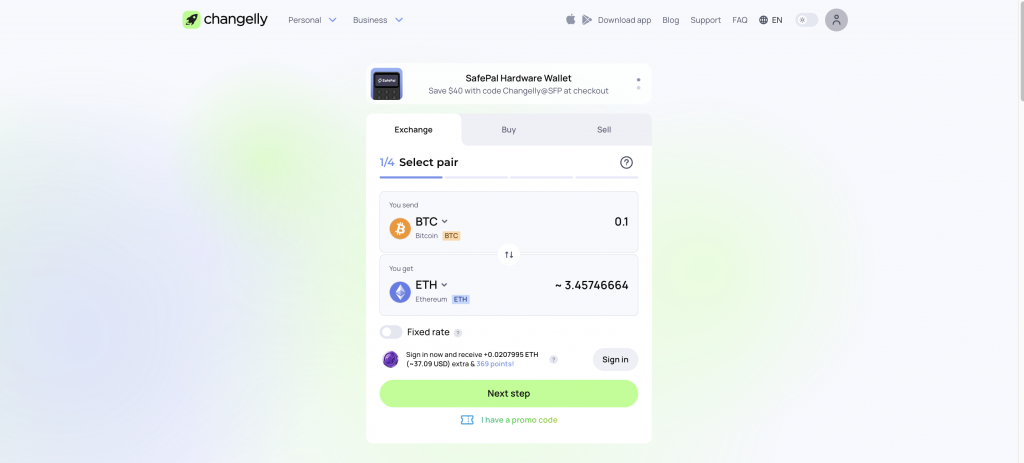
The process starts with the asset you want to send and the asset you want to receive. Changelly then shows an estimated result based on its connected providers, network fees, and the rate type you select. This step needs careful review because similar assets can run on different networks, such as USDT on Ethereum, Tron, or BNB Smart Chain.
Entering Your Wallet Address
After you choose the pair, you add the wallet address where you want to receive the exchanged crypto. This part carries real risk because Changelly uses the address to build that specific transaction. If you enter the wrong address, select the wrong network, or miss a required memo or destination tag, recovery may involve delays, extra costs, or no recovery route.
Fixed and Floating Rates
Changelly gives users two rate modes. A floating rate tracks market movements, so the final amount may change before completion. A fixed rate locks the quote for 15 minutes, or 20 minutes for selected assets such as BTC, XMR, LTC, and BNB. The fixed route can still fail if you send funds late, send the wrong amount, or reuse a one-time address.
Transaction Checks and KYC
Changelly usually lets users start with an email account, but its terms allow AML and KYC checks on selected users, addresses, and transactions. The company can ask for identity documents and source-of-funds details when its monitoring flags activity. This creates the main trade-off in the user journey: small swaps may move quickly, while flagged transactions can face review before completion or refund.
Key Changelly Features
Changelly’s feature set follows the same exchange-first logic as its transaction flow. The service gives you crypto swaps first, then adds fiat routes, rate choices, mobile access, and partner integrations around that core process. Each feature affects how much control you keep over the transaction and how many third parties take part in it.
Crypto-to-Crypto Swaps
Crypto-to-crypto swaps sit at the center of Changelly’s service. You choose the asset you want to send, select the coin you want to receive, and provide the wallet address for the payout.
Changelly then routes the transaction through connected liquidity providers and shows the estimated output before you send funds. This can suit users who already hold crypto in a wallet and want to exchange it without opening a full trading account.
Fiat Buy and Sell Services
Changelly also lists fiat buy and sell services through its marketplace model. This part works differently from a direct crypto swap because third-party fiat providers handle card payments, bank routes, limits, and fees. Changelly’s terms state that it acts as an aggregator for these providers, so you need to review the selected provider’s pricing, payment methods, verification steps, and refund policies before you continue.
Fixed-Rate Exchange
The fixed-rate exchange gives you a quoted rate for a limited time. Changelly’s terms state that the rate lock lasts 15 minutes, or 20 minutes for selected assets such as BTC, XMR, LTC, and BNB. This format helps you know the expected output before payment, but it still requires careful timing. If you send funds late, send the wrong amount, or reuse a one-time address, the exchange may fail.
Floating-Rate Exchange
The floating-rate exchange follows market movement until Changelly completes the transaction. This means the amount you receive can differ from the estimate shown at the start.
The terms also state that floating-rate addresses expire after three hours, so timing still affects the result. This route may make sense when you accept rate movement, but you should still check network fees, provider terms, and the final payout estimate.
Mobile App
Changelly’s mobile app gives you access to swaps, buy and sell routes, price information, and transaction tracking from your phone. The app works in 12 languages and has an average 4.7 rating across the App Store and Google Play. For users who manage crypto from mobile wallets, the app can make the exchange process easier to follow, though address and network checks still need full attention.
Wallet and Partner Integrations
Changelly also appears inside wallet and partner ecosystems, which helps users reach swap tools from services they already use. The website references integrations with wallet brands such as Exodus, Ledger, Tangem, CoolWallet, Ellipal, and Trezor.
Changelly also offers business products, including Exchange API, fiat on/off-ramp tools, Changelly Pay, and DeFi API. These integrations expand access, but the same transaction risks still apply: wrong networks, expired addresses, provider fees, and KYC checks can affect the outcome.
Changelly Fees Explained
Changelly fees depend on the route you choose, so you should separate crypto swaps from fiat purchases before judging the cost. For floating-rate crypto swaps, Changelly’s terms list a 0.25% exchange fee taken from the output amount. You also pay a network fee, which covers blockchain transaction processing and can change between the estimate shown at checkout and the final transaction cost.
Fixed-rate swaps work through a quoted rate. Changelly locks that rate for a short window, so the price you see includes the conditions available at that moment. You still need to send the exact amount on time, because late payments, underpayments, or reused one-time addresses can trigger a failed transaction or refund process with extra fees.
Fiat buy-and-sell services need a separate check. Changelly’s terms describe the fiat section as a marketplace of third-party providers, which means the selected provider controls its own payment fees, limits, verification steps, and refund rules.
Also, depending on the source, you may find varying information about fiat-to-crypto or crypto-to-fiat fees. Some online Changelly reviews mention a 5% fee, while the platform’s own terms direct users to the provider’s final screen. For that reason, the checkout page should guide your cost check before you make a payment.
Can Changelly Be Considered Safe?
Changelly offers users a non-custodial swap flow, but safety review cannot stop at wallet custody alone. You also need to look at transaction addresses, AML/KYC controls, restricted regions, third-party providers, and public complaints around delayed funds.
Non-Custodial Exchange Flow
Changelly says it does not store crypto on deposits or balances. Each swap uses a generated address for one transaction, and the payout goes to the wallet address you provide. This reduces long-term platform custody, but it also puts address, network, memo, and timing checks on the user before sending funds.
Transaction Monitoring and AML Checks
Changelly’s terms allow AML and KYC checks on selected users, wallet addresses, and transactions. The company can request identity documents and source-of-funds details before completing an exchange or refund. This control helps transaction monitoring, but it can also delay swaps after the user has already sent crypto to Changelly’s generated address.
User Complaints and Fund Holds
Public reviews and forum discussions include repeated complaints about frozen or delayed transactions, especially on larger swaps. Some users describe long KYC reviews, source-of-funds questions, and slow fund returns. These reports do not prove every transaction carries the same risk, but they make transaction size and documentation readiness important safety points.
Changelly User Experience
Changelly keeps the interface simple, but the user experience depends on careful transaction checks before payment.
Web Platform
The web platform follows a direct-swap layout. You choose the pair, compare the estimated output, select fixed or floating rate, enter your receiving wallet, and send funds to the generated address. The screen works well for simple swaps, but users must check asset names, networks, tags, fees, and timing before confirming.
Customer Support
Changelly advertises 24/7 live support, which matters because failed swaps, KYC reviews, wrong-network transfers, and refund requests can require manual help. Although we didn’t encounter any issues with its customer support, public feedback is somewhat mixed. Some users praise fast replies, while others report long waits during fund holds, especially when compliance checks involve source-of-funds documents.
Changelly Pros and Cons
Changelly can work well for users who want wallet-to-wallet crypto swaps, but its limits become more important when transactions involve large amounts, fiat providers, or compliance checks.
Pros:
- Changelly supports 1,000+ crypto assets for exchange.
- The swap flow sends exchanged crypto to the wallet address provided by the user.
- Users can choose between fixed-rate and floating-rate exchanges.
- The platform offers a mobile app with tools for swapping, buying, selling, and tracking.
- Changelly connects with wallet brands and business products, including Exchange API, Changelly Pay, and DeFi API.
Cons:
- Changelly can trigger AML/KYC checks after a user sends crypto to the generated address.
- Public complaints include delayed transactions, fund holds, and long source-of-funds reviews.
- Changelly’s terms restrict users in several regions, including the UK and the U.S.
Changelly vs CEX.IO
Changelly and CEX.IO approach crypto from two separate product models. Changelly works around wallet-to-wallet swaps. You select a crypto pair, enter your receiving wallet address, choose a fixed or floating rate, and send funds to a one-time address. That structure can work for users who already hold crypto in a private wallet and want a direct exchange route without building a full account balance on the platform.
CEX.IO gives users an account-based crypto experience. Eligible users can buy, sell, convert, store, track, deposit, and withdraw supported digital assets through one platform, depending on region and product availability. This creates a clearer path for users who want repeated crypto activity because balances, transaction history, payment methods, and wallet tools are all within the same account environment.
Fees also work in separate ways. Changelly lists a 0.25% floating-rate exchange fee for crypto swaps, while fixed-rate swaps include the rate shown at checkout. Fiat buy and sell services depend on third-party providers, so card, bank, verification, and refund rules can change by provider. CEX.IO uses product-based pricing across buying, conversion, trading, deposits, and withdrawals, so users need to check the final quote or fee schedule for the service they choose.
The safety trade-off also differs. Changelly does not store user balances, but AML/KYC checks can start after funds reach the generated address. CEX.IO uses a platform account, which can feel more predictable for users who prefer to complete verification, review supported payment methods, and manage crypto activity from a single dashboard.
Final Verdict: Is Changelly Worth Considering?
Changelly can be worth considering for users who already hold crypto in a private wallet and want a direct swap route across many supported assets. Its fixed and floating rates, mobile app, and wallet integrations make the process accessible for smaller exchanges. Still, larger transactions warrant caution because AML/KYC checks, refund rules, restricted regions, and public complaints about fund-holding pose added risk. Users who want account-based crypto services may prefer a different-style platform, such as CEX.IO, with verification, balances, and payment tools in one place.
Changelly Review FAQs
What is Changelly?
Changelly is a crypto exchange service operated by Marella LLC and its affiliates. It launched in 2015 and supports crypto swaps, fiat buy and sell routes, a mobile app, business APIs, Changelly Pay, and DeFi tools. Its core exchange flow sends crypto to the wallet address supplied by the user.
Is Changelly available in the UK?
No. Changelly’s Terms of Use list the United Kingdom as a restricted location. The same restriction list also names the United States, Germany, Austria, Hong Kong SAR, India, Japan, Turkey, and several sanctioned or high-risk regions. UK-based users should not assume access through the main Changelly service.
Is Changelly regulated?
Changelly’s Terms of Use name Marella LLC and apply St. Vincent and the Grenadines law for disputes. The reviewed materials do not show FCA, EU MiCA, or U.S. authorization. One source also states that the UK FCA placed Changelly on its public warning list.
Does Changelly require KYC?
Changelly does not require full KYC for every standard swap, but users must create an account with a verified email. Its terms allow AML/KYC checks on selected users, wallet addresses, and transactions. Changelly can request identity documents and source-of-funds details before completing an exchange or refund.
What fees does Changelly charge?
Changelly lists a 0.25% fee for floating-rate crypto swaps, taken from the output amount. Users also pay network fees, which can differ from the estimate shown at checkout. Fixed-rate swaps include the quoted rate. Fiat buy and sell fees depend on the third-party provider selected in the marketplace.
Can you buy crypto with fiat on Changelly?
Yes. Changelly offers fiat buy and sell routes through third-party providers in its marketplace. Supported routes can include bank cards, bank transfers, Apple Pay, and other payment methods, depending on the provider and region. The selected provider controls payment fees, limits, verification steps, processing times, and refund rules.
How does Changelly compare with CEX.IO?
Changelly works best as a wallet-to-wallet swap route for users who already hold crypto. CEX.IO gives eligible users an account-based setup for buying, selling, converting, storing, depositing, withdrawing, and tracking supported digital assets. Changelly suits one-off swaps; CEX.IO fits users who want repeated crypto activity in one dashboard.