
Choosing a cryptocurrency exchange in 2026 requires more than reviewing a list of supported coins. As the industry matures, factors like regulatory compliance, security architecture, and fee transparency have become key benchmarks for both retail and professional traders. Kraken has long positioned itself as a security-focused exchange, a reputation it has maintained for more than a decade.
This review provides an objective, fact-based overview of Kraken’s current offerings, from its simplified retail interface to the Kraken Pro ecosystem. It is intended to outline how the platform functions for different types of market participants.
Platform Overview and Market Position
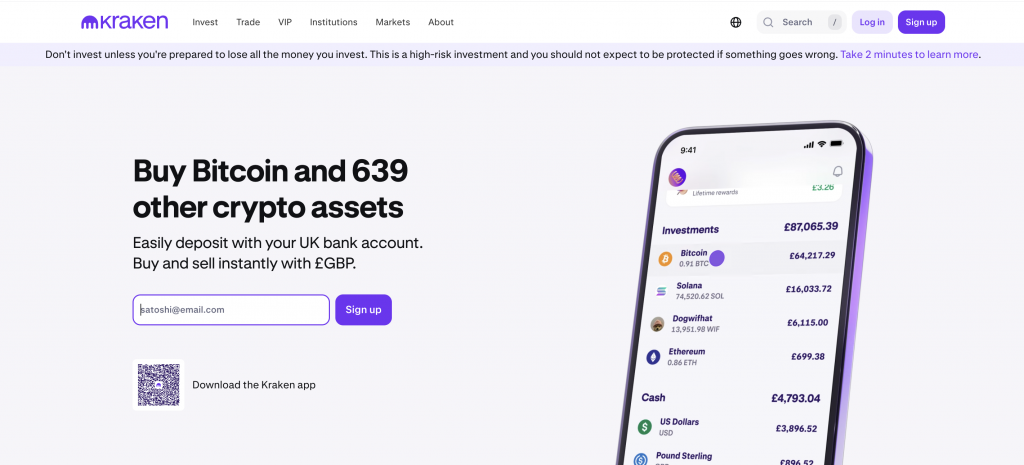
Founded in 2011, Kraken is one of the oldest and most established digital asset exchanges globally. In 2026, it occupies a middle ground in the market, combining a relatively accessible interface with advanced trading tools.
Kraken places strong emphasis on security and transparency. It remains one of the few major exchanges to perform quarterly Proof of Reserves audits, allowing users to verify that their assets are backed 1:1 on-chain. Recently, Kraken Financial, the firm’s Wyoming-chartered bank, gained access to a Federal Reserve Master Account, further connecting traditional financial infrastructure with digital assets.Key Features and Ecosystem
Kraken has evolved from a simple trading desk into a multi-tiered ecosystem. Depending on your experience level, you will likely interact with one of two distinct interfaces.
Kraken Standard vs. Kraken Pro: Navigating the Dashboards
For many users, the primary question is how to use Kraken Advanced Trade features without being overwhelmed. Kraken distinguishes these through two separate platforms:
- Kraken (Standard): This is the simplified retail interface available via the web and the main Kraken app. It is designed for “Instant Buy” transactions, recurring buys (DCA), and basic portfolio tracking. It prioritizes speed and simplicity over cost-efficiency.
- Kraken Pro: This is the platform’s advanced trading suite. It includes charting via TradingView, depth-of-market views, and multiple order types, such as stop-loss, take-profit, and limit orders. Kraken Pro uses a different fee structure from the standard interface and is generally used by participants who want more control over trade execution.
Kraken+ Subscription: Evaluating the Value Proposition
Kraken introduced Kraken+, a premium subscription service designed for retail users who frequently use the simplified Kraken interface. The service costs $4.99 per month and includes several platform features.
The primary feature is zero trading fees on up to $10,000 in monthly trading volume when using the Buy, Sell, or Convert tools on the Kraken web platform or mobile app. After the monthly allowance is exceeded, standard trading fees apply. Spreads and payment processing fees may still apply, even when the trading fee itself is waived.
Kraken+ subscribers may also receive boosted rewards on select stablecoins, including higher APY on assets like USDG and USDC, as well as priority customer support and access to curated airdrops. These features are aimed at frequent retail users who prefer the simplified trading interface instead of Kraken Pro.
Staking and Passive Income: Yields and Proof-of-Stake
Kraken’s staking program remains a key feature of the platform. Users can receive rewards by staking supported proof-of-stake assets directly from their Kraken balances.
The exchange offers both flexible staking, where assets remain accessible, and bonded staking, which temporarily locks assets in exchange for higher reward rates. Rewards are typically distributed weekly and automatically added to the user’s account.
Reward rates vary by asset and network conditions. For example:
- Ethereum (ETH) currently offers approximately 1.1–1.35% APR for flexible staking and around 2.6–2.8% for bonded staking.
- Polkadot (DOT) offers approximately 3.4–5.8% APR for flexible and 10.8–11.8% APR for bonded.
- Cosmos (ATOM) offers comparatively high reward rates on the platform, with flexible rewards of around 8.8–9.7% and bonded rewards approaching 19%.
Kraken also introduced ETH restaking via the EigenLayer protocol and BTC staking powered by the Babylon protocol, expanding the ways users can generate rewards from supported assets.
Kraken Desktop and Web3: Professional Tools and Self-Custody
For high-frequency traders, Kraken Desktop offers a downloadable, low-latency application with a customizable workspace. Simultaneously, the exchange has expanded into Web3 through Kraken Wallet, a self-custody solution that integrates with DeFi protocols and NFT marketplaces across Ethereum, Solana, and Polygon.
User Interface and Experience
Kraken’s UI is characterized by a “clean and clinical” aesthetic. Unlike some competitors that use gamified elements or flashy banners, Kraken maintains a professional look.
- Onboarding: The KYC (Know Your Customer) process is streamlined but thorough. Most users can reach “Intermediate” verification in under 15 minutes by providing a government ID and a selfie.
- Navigation: The dashboard provides a clear overview of total balance, 24-hour change, and an “Earn” tab for staked assets.
- Accessibility: While the standard app is beginner-friendly, the transition to Kraken Pro can be steep for those unfamiliar with order books. However, Kraken provides extensive educational resources to bridge this gap. [LINK TO: How to Read Crypto Charts Guide]
Fees and Pricing: A Transparent Breakdown
Kraken’s fee structure is split between its two platforms. Transparency is a core focus, but users should note that the standard app generally carries higher transaction costs than Kraken Pro.
| Platform | Type of Fee | Rate (2026) |
| Kraken (Standard) | Instant Buy/Sell | 1% trading fee + spread |
| Kraken (Standard) | Stablecoin-to-Stablecoin | 0.9% |
| Kraken Pro | Maker (Limit Order) | 0.25% (starts at) |
| Kraken Pro | Taker (Market Order) | 0.40% (starts at) |
| Kraken+ | Monthly Subscription | $4.99/month (0% trading fees on up to $10k monthly volume for standard interface trades) |
Note: Kraken Pro fees decrease as your 30-day trading volume increases. For high-volume traders (> $10M), maker fees can be as low as 0.00%.
Payment Methods and Fiat Support
Kraken supports a wide array of fiat currencies, including USD, EUR, GBP, CAD, AUD, and CHF. In 2026, it continues to maintain broad connectivity with traditional banking rails.
Payment Methods for U.S. Customers
| Payment Method | Buy | Sell | Add Cash | Cash Out | Speed |
| Bank Account (ACH) | ✔ | ✔ | ✔ | ✔ | Near-instant deposit |
| FedWire (Wire) | ✔ | ✔ | ✔ | ✔ | 0-1 Business Day |
| Debit Card | ✔ | ✘ | ✘ | ✘ | Instant |
| PayPal | ✔ | ✘ | ✔ | ✔ | Instant deposit (72-hour withdrawal hold) |
| Apple / Google Pay | ✔ | ✘ | ✘ | ✘ | Instant |
| Kraken Financial (Internal) | ✔ | ✔ | ✔ | ✔ | Real-time |
Security, Compliance, and Trust
Security is one of Kraken’s core areas of focus. In an industry where exchange breaches remain a recurring risk, Kraken’s record is frequently cited in discussions of platform resilience.
- Storage: 95% of all deposits are kept in “air-gapped” cold storage across multiple geographic locations.
- Audits: Kraken was a pioneer of Proof of Reserves. This cryptographic audit allows users to verify that their account balance is included in a snapshot of the exchange’s total liabilities.
- Account Protection: The platform supports FIDO2 security keys, such as YubiKey, 2FA, and a Global Settings Lock that can prevent account changes for a set period, even if login credentials are compromised.
- Regulatory Status: Kraken is registered as a Money Services Business with FinCEN in the U.S. and is regulated by the FCA in the UK and AUSTRAC in Australia.
- Regulatory Status: Kraken is registered as a Money Services Business (MSB) with FinCEN in the U.S. and is regulated by the FCA in the UK and AUSTRAC in Australia.
Asset Selection and Regional Availability
As of 2026, Kraken supports over 300 cryptocurrencies on its standard platform and over 500 pairs on Kraken Pro. This includes majors like Bitcoin (BTC) and Ethereum (ETH), as well as a vast selection of AI tokens, Layer-2s, and stablecoins.
- U.S. Availability: Kraken is available in 48 U.S. states. It currently does not offer services to residents of New York (NY) or Maine (ME) due to specific state licensing requirements.
- International: It operates in over 190 countries, though features like margin and futures trading are restricted in certain jurisdictions (such as the UK and parts of the EU) for retail clients.
Mobile App Experience
Kraken maintains two separate apps to cater to different user needs:
- The Kraken App: Best for casual users. It focuses on buying, selling, and tracking your portfolio. The “Explore” tab helps users buy crypto on Kraken by category, such as “DeFi,” “Gaming,” or “New Listings.”
- Kraken Pro App: This app is designed for mobile traders. It mirrors much of the desktop experience, with access to the order book, advanced charting, and margin management. It is often described as a stable mobile trading environment.
Customer Support and Service Reliability
Unlike many competitors that rely solely on automated bots, Kraken provides 24/7/365 live human support.
- Live Chat: Typical response times are under 2 minutes.
- Phone Support: Available through the mobile app for specific account tiers and regions.
- Support Library: Their documentation is exhaustive, covering everything from “how to use Kraken Advanced Trade” to complex tax reporting questions.
Kraken Pros & Cons
Pros
- Top-Tier Security: Quarterly Proof of Reserves and no history of major fund losses.
- Competitive Pro Fees: Lower entry-level fees than Coinbase Advanced for most traders.
- Deep Liquidity: High trading volumes ensure minimal slippage on major pairs.
- Global Compliance: Heavily regulated and accessible in most major markets.
- Advanced Features: Broad staking access and advanced trading tools.
Cons
Learning Curve: The distinction between the two apps can be confusing for total beginners.
Expensive Standard Fees: The 1.5% fee on the main app is higher than Pro’s.
Geographic Restrictions: Limited service in New York, Maine, and certain countries.
Kraken Alternatives: How CEX.IO Compares
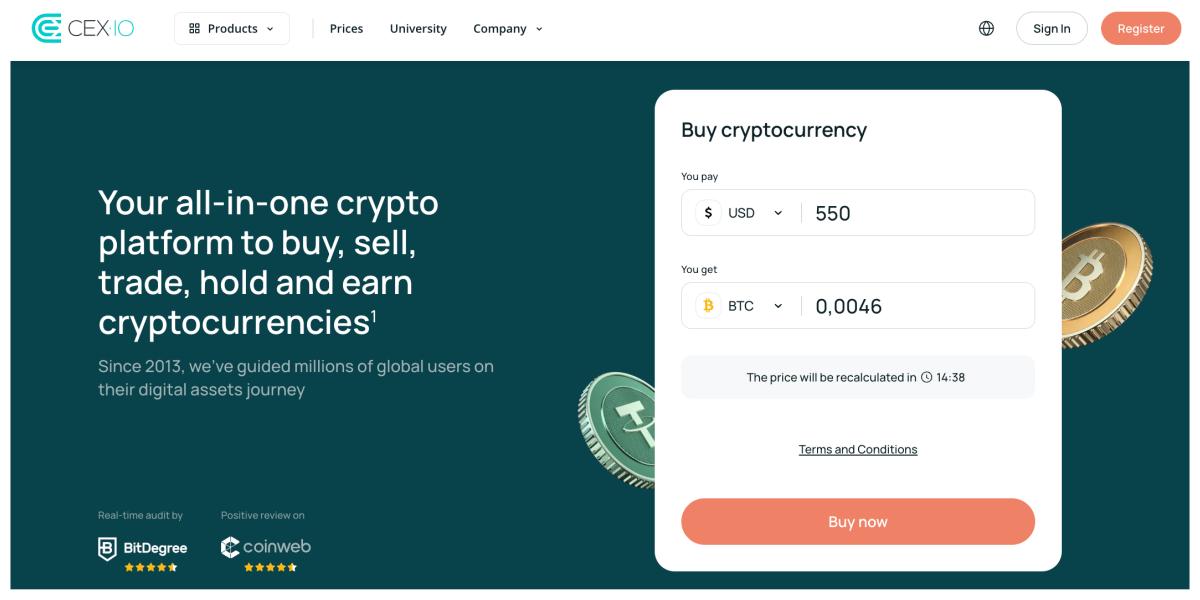
Kraken is widely recognized for its security framework and large asset catalog, while other exchanges focus more on payment accessibility and funding flexibility. CEX.IO provides payment infrastructure for everyday crypto transactions, supporting ACH transfers, debit and credit cards, PayPal for eligible U.S.-based users, Google Pay, and Apple Pay.
Trading costs also begin slightly lower, with spot fees starting at 0.25%, compared with 0.25% maker and 0.40% taker fees at Kraken Pro’s entry tier. This creates a different payment and cost profile for users when comparing exchange services.
Final Verdict: Is Kraken Right for You?
Kraken remains one of the most established exchanges in the industry, particularly for participants who prioritize Proof of Reserves transparency, advanced trading infrastructure, and a wide selection of digital assets. Its Kraken Pro platform offers competitive fees and deep liquidity, making it a notable platform for active trading.
At the same time, platform selection often depends on payment accessibility and overall cost structure. Exchanges such as CEX.IO provide a different mix of funding methods and lower starting spot trading fees for eligible U.S. users while operating within a regulated framework.
FAQ
How trustworthy is Kraken?
Kraken is often regarded as one of the more established exchanges in the industry due to its long operating history and emphasis on transparency. Since 2011, the exchange has operated through multiple market cycles without a major system-wide breach that resulted in the loss of user funds. Its quarterly Proof of Reserves audits allow users to verify that their assets are held 1:1. In addition, Kraken Financial’s integration with the U.S. Federal Reserve system adds another layer of regulatory relevance to the company’s U.S. operations.
Is Kraken safe?
Kraken describes its platform as using multiple security controls. These include holding 95% of assets in air-gapped cold storage and maintaining physical security measures at data center locations. For user-level protection, Kraken supports FIDO2 hardware keys, PGP email encryption, and a Global Settings Lock that can restrict unauthorized account changes. While no platform is immune to risk, Kraken also operates a Security Labs team that researches vulnerabilities across the broader crypto ecosystem.
Is Kraken free?
Kraken is not free to use, as it charges fees for trades and certain withdrawal methods. However, there are no fees for opening or maintaining an account. Trading costs depend on the platform used: the standard Kraken app charges a convenience fee of approximately 1.5% plus a spread, while Kraken Pro uses a maker-taker model with fees starting at 0.25% and 0.40%, respectively. Kraken+ also offers zero-fee trading in the standard app up to its monthly threshold, though spreads and other charges may still apply.
Is Kraken better than Coinbase?
The comparison between Kraken and Coinbase depends on the features being considered. Coinbase is often associated with a more simplified interface and educational features, while Kraken is often associated with lower trading fees on its Pro platform and broader staking availability. Both platforms operate within regulated environments and provide different combinations of interface design, fee structure, and asset access. The distinction usually comes down to which platform characteristics matter most to the user.
Is Kraken legal in the US?
Yes, Kraken operates legally in most of the United States. It is registered as a Money Services Business with FinCEN and complies with federal anti-money laundering and KYC requirements. However, due to state-level regulations, Kraken does not currently offer services to residents of New York or Maine. In addition, certain features, such as margin and futures trading, are restricted to Eligible Contract Participants in the U.S. to comply with CFTC and SEC requirements. Service availability may vary by state and product type.
What is the difference between Kraken and Kraken Wallet?
The primary difference is custody. Kraken is a centralized exchange where the platform manages private keys and holds funds on the user’s behalf, in a way that supports faster trading and account recovery processes. Kraken Wallet, by contrast, is a non-custodial Web3 wallet. This means the user controls the private keys and assets directly. While Kraken Wallet allows direct interaction with decentralized apps and NFTs, it also means that responsibility for wallet security and recovery phrase storage remains with the user.
Disclaimer: For information purposes only. Not investment or financial advice. Seek professional advice. Digital assets involve risk. Do your own research.