
Choosing the best crypto exchanges in 2026 is especially important for New Zealand users, since the country rolled out the Crypto-Asset Reporting Framework (CARF) on April 1, 2026. CARF means any platform serving NZ users must collect and report transaction data to Inland Revenue — so regulatory compliance is now a hard requirement, not just a preference. New Zealand traders can access both local NZD-native platforms and major international exchanges, but each category comes with different trade-offs: local platforms offer NZD bank transfers, while global exchanges provide broader coin selection and more advanced features. This guide reviews five leading platforms — Kraken, CEX.IO, Coinbase, Independent Reserve, and Bitget — comparing regulation, NZD support, fees, security, and coin selection for NZ-based users.
Summary of Best Crypto Exchanges in New Zealand
| Exchange | Best For | Regulation | Entry-Level Fees | NZD Support | NZ Availability |
|---|---|---|---|---|---|
| Kraken | Security-focused traders | 50+ global licences | ~0.26% maker / ~0.16% taker | No NZD pairs | Yes |
| CEX.IO | Global access, 310+ coins | 40+ global licences | 0.25% (≤$10K) | No NZD pairs | Yes — cex.io/en-NZ |
| Coinbase | Beginners | Global compliance | 0.60% taker / 0.40% maker | No NZD pairs | Yes |
| Independent Reserve | NZD deposits, local transfers | AUSTRAC registered | ~0.50% | NZD bank transfers | Yes |
| Bitget | Altcoin traders | Multiple international licences | ~0.10% | No NZD pairs | Yes |
Kraken
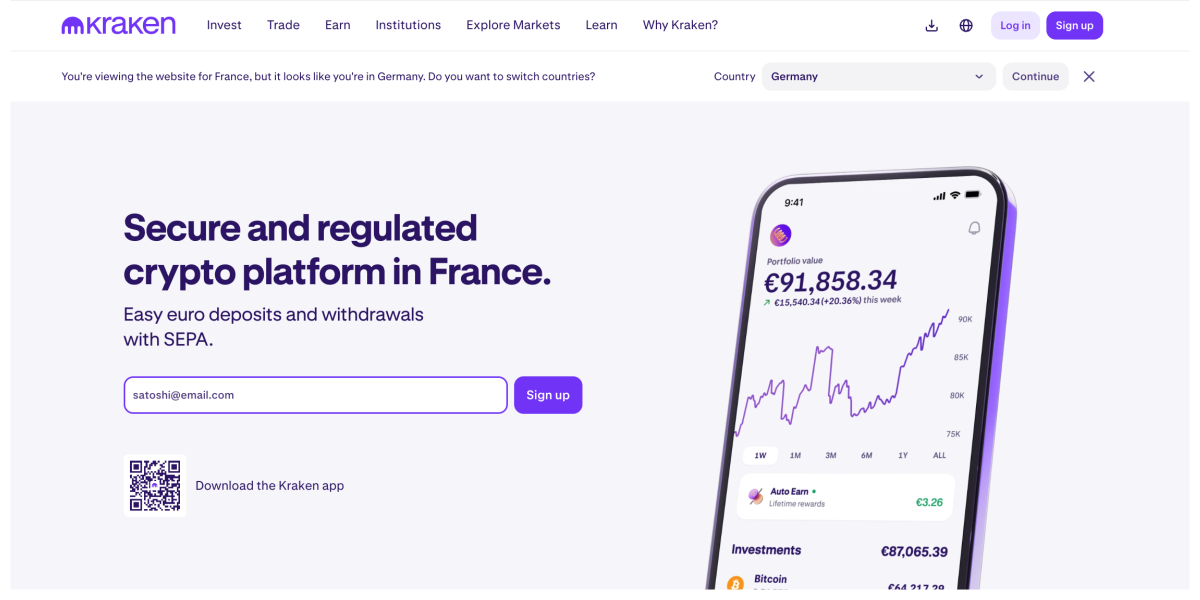
Kraken launched in 2011 and holds over 50 regulatory licences across major jurisdictions, making it one of the most broadly licensed exchanges available to New Zealand users. The platform serves traders in New Zealand through its standard global offering — spot trading, transparent proof-of-reserves, and a long security track record with no successful major hack on record. NZ users fund accounts via credit and debit card or USD/EUR wire transfers, since Kraken does not offer NZD pairs or NZD-specific bank transfers. For traders who value established credibility and low maker fees, Kraken delivers a well-tested platform.
Key Features
Kraken’s feature set covers 290+ cryptocurrencies with spot trading available to NZ users. Fees start at approximately 0.26% maker and 0.16% taker, which undercuts Coinbase’s 0.40%/0.60% structure at comparable volumes. The proof-of-reserves programme publishes cryptographic verification of customer funds, a transparency mechanism Coinbase and Bitget do not offer in the same format. Kraken’s advanced trading interface includes charting tools and order types suited to experienced traders, while the basic Buy Crypto flow serves beginners. The platform’s security architecture uses cold storage for the majority of user assets and enforces two-factor authentication across all accounts.
Kraken Pros and Cons
Kraken earns strong marks for security and fee structure, and NZ users access the same global platform as traders worldwide. The combination of low fees, proof-of-reserves, and a decade-plus security record makes it a dependable choice for experienced traders.
Pros:
- 290+ coins available for spot trading in NZ
- Low fees: ~0.26% maker / ~0.16% taker
- Verified proof-of-reserves published publicly
- Strong security record since 2011 with no major breach
- 50+ global regulatory licences
Cons:
- No NZD trading pairs — NZ users trade in USD or EUR
- Bank transfers require USD or EUR accounts
- Interface has a steeper learning curve for first-time users
Why Choose Kraken
New Zealand traders who want an established global exchange with a verifiable security history will find Kraken fits that requirement. The platform’s proof-of-reserves programme gives users on-chain confirmation that their funds exist on the exchange — a factual assurance most platforms do not provide. Low taker fees reward active traders, and the 290+ coin selection covers the major assets most NZ buyers target.
Kraken does not offer NZD banking, so NZ users need a card or an international wire transfer to deposit fiat. For traders comfortable with USD or EUR funding and who want a security-first platform, Kraken is a well-established option in New Zealand.
CEX.IO
CEX.IO has operated since 2013 and holds over 40 regulatory licences and registrations globally, operating legally in New Zealand with a dedicated NZ page at cex.io/en-NZ. The platform offers spot trading across 310+ cryptocurrencies, with card deposits available directly from New Zealand — NZ is not on CEX.IO’s restricted card deposit list. NZ users can also fund accounts via SWIFT international wire transfer. CEX.IO Earn lets eligible users put crypto to work through staking and savings programmes, and 24/7 customer support is available across all account tiers.

Key Features
CEX.IO’s coin selection reaches 310+, surpassing Kraken’s 290+ and Coinbase’s 200+, giving NZ traders access to a wide range of assets through one account. Entry-level fees stand at 0.25% for volumes up to $10,000, which is lower than Coinbase’s 0.60% taker fee and competitive with Kraken’s structure at lower trade sizes. Card deposits using Visa or Mastercard work from New Zealand, enabling fast access to crypto without requiring international bank accounts. CEX.IO Earn provides staking and savings options across supported assets, adding utility for users who hold positions long-term. The interface suits both new users and active traders, with a clean onboarding flow and more advanced order management available once verified.
CEX.IO Pros and Cons
CEX.IO delivers a strong combination of global regulatory standing, a broad coin catalogue, and working card deposit infrastructure for New Zealand. The platform’s dedicated NZ page and 24/7 support signal a genuine regional commitment beyond passive availability.
Pros:
- 310+ cryptocurrencies available for spot trading
- Card deposits (Visa/Mastercard) work from New Zealand
- SWIFT wire transfers available for NZ users
- CEX.IO Earn for staking and savings
- 40+ global licences; dedicated NZ page at cex.io/en-NZ
- 24/7 customer support
Cons:
- No NZD trading pairs — accounts operate in USD or EUR
- No direct NZD bank transfer option
- Spot trading only in NZ
Why Choose CEX.IO
For New Zealand users who want a globally regulated exchange with direct card access, CEX.IO covers that requirement well. Card deposits work immediately from NZ-issued Visa and Mastercard cards, so users can buy Bitcoin or other assets within minutes of creating an account. The 310+ coin selection outpaces most competitors available in NZ, and the CEX.IO Earn programme adds value for users holding assets over time.
CEX.IO does not offer NZD bank transfers, so users fund accounts by card or SWIFT. This is a straightforward trade-off: card deposits are fast and accessible, SWIFT is available for larger transfers. For NZ traders who want a broad global platform with verified regulatory credentials and working fiat access from New Zealand, CEX.IO is a well-supported option.
Coinbase
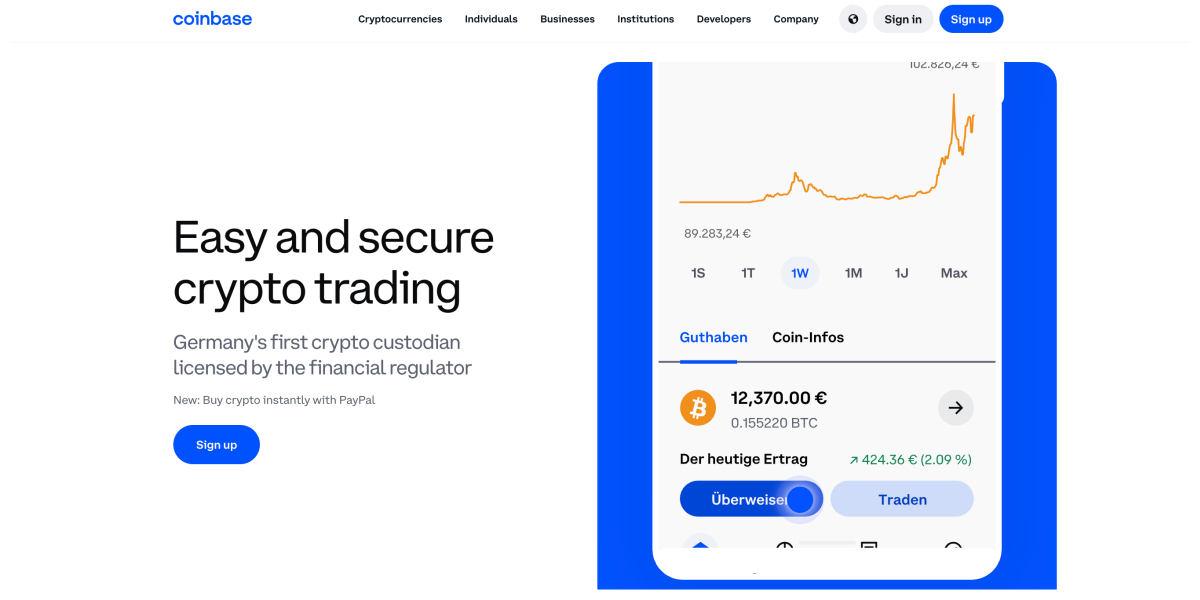
Coinbase operates with strong global compliance credentials and serves New Zealand users through its standard international platform, with 200+ coins available for spot trading. Founded in 2012, Coinbase built its reputation on beginner accessibility — the account creation flow, educational content, and mobile app design target users new to crypto. Fees run higher than most competitors at 0.60% taker and 0.40% maker for standard accounts, with lower rates available on Coinbase Advanced Trade for active users. NZ users fund accounts by card or wire transfer, as NZD pairs are not available.
Key Features
Coinbase’s 200+ coin selection is smaller than CEX.IO’s 310+ or Kraken’s 290+, but it covers the major assets most NZ buyers need. The beginner-oriented interface walks new users through account setup, identity verification, and first purchase in a clear sequence. Coinbase Advanced Trade provides a separate pro-level interface with lower fees, a full order book, and charting tools — accessible to the same account without a second registration. The mobile app receives consistently high ratings on iOS and Android, which suits NZ users who manage positions on the go. Security features include biometric login and 2FA. Note: Coinbase’s FDIC pass-through insurance on USD balances applies to US users only — NZ users’ funds are held in segregated custodial accounts without FDIC coverage.
Coinbase Pros and Cons
Coinbase is the clearest entry point for NZ users buying crypto for the first time, with a product deliberately built around removing barriers to that first purchase. The trade-off is higher fees on the standard tier and a smaller coin selection compared to other exchanges reviewed here.
Pros:
- Beginner-friendly interface with guided onboarding
- Strong global regulatory compliance
- Coinbase Advanced Trade available for lower fees at higher volumes
- Reliable mobile app with strong user ratings
- Educational content and Learn & Earn programmes
Cons:
- Higher fees: 0.60% taker / 0.40% maker on standard accounts
- 200+ coins — smaller selection than Kraken or CEX.IO
- No NZD trading pairs
Why Choose Coinbase
New Zealand users starting with crypto will find Coinbase’s onboarding the most guided of the platforms reviewed here. The step-by-step account setup, clear fee disclosures, and educational resources reduce the friction of a first purchase. Coinbase’s regulatory standing across multiple jurisdictions also gives new users confidence in the platform’s legitimacy.
Active traders who outgrow the standard interface can move to Coinbase Advanced Trade, which cuts fees significantly. For NZ users who want a globally recognised name with strong compliance and a product built for simplicity, Coinbase fulfils that role — even if the entry-level fee sits higher than CEX.IO or Kraken.
Independent Reserve
Independent Reserve, founded in 2013, holds AUSTRAC registration in Australia and actively serves New Zealand users with NZD bank transfers via local NZ bank accounts — a capability no other exchange in this review offers. The platform supports AUD and NZD trading pairs, allowing NZ users to buy and sell crypto directly in their local currency without currency conversion overhead. Independent Reserve is CARF compliant as of its April 2026 rollout in New Zealand. For NZ traders who want to deposit and withdraw in NZD through local banks, Independent Reserve provides a direct path that global platforms currently do not match.

Key Features
Independent Reserve’s NZD support is its defining feature: NZ users deposit through local bank transfers, and NZD/BTC, NZD/ETH, and other NZD pairs allow trading without converting to USD or EUR first. The coin selection reaches approximately 30+ assets — substantially smaller than Kraken’s 290+ or CEX.IO’s 310+, but covering the major cryptocurrencies most NZ buyers target. Self-Managed Super Fund (SMSF) account support extends the platform’s reach into institutional and retirement-focused investors, a product angle not available on the global exchanges in this review. CARF compliance means Independent Reserve already reports user transaction data to Inland Revenue under the April 2026 framework. Fees start at approximately 0.50% for standard trades, higher than Kraken or CEX.IO but typical for NZD-native platforms.
Independent Reserve Pros and Cons
Independent Reserve solves the core problem NZ traders face on global platforms — NZD access. Local bank transfers and NZD trading pairs remove the currency friction that makes global exchanges less convenient for everyday NZ buyers.
Pros:
- NZD deposits via local New Zealand bank transfers
- NZD/BTC, NZD/ETH, and other NZD trading pairs
- AUSTRAC registered and CARF compliant
- SMSF account support for institutional and retirement investors
- Established since 2013 with NZ-focused operations
Cons:
- 30+ coins — significantly smaller selection than global exchanges
- NZD deposit fee of NZ$15 for amounts below NZ$5,000; NZ$20 per withdrawal
- Higher standard trading fees (~0.50%) compared to Kraken or CEX.IO
- Less suited for advanced trading or large altcoin portfolios
Why Choose Independent Reserve
Independent Reserve is the strongest option for NZ traders who want to buy and sell crypto in NZD through local bank transfers. The absence of currency conversion and the availability of NZD trading pairs make the end-to-end experience straightforward for NZ-first users. CARF compliance is already in place, which means the platform meets the April 2026 reporting requirement without any action needed from users.
The coin selection of approximately 30+ assets covers Bitcoin, Ethereum, and the major altcoins, which satisfies the needs of most NZ buyers. Traders who need access to a wider range of assets may need to supplement with a global platform. For straightforward NZD-in, NZD-out crypto trading, Independent Reserve delivers what no other exchange in this review can.
Bitget
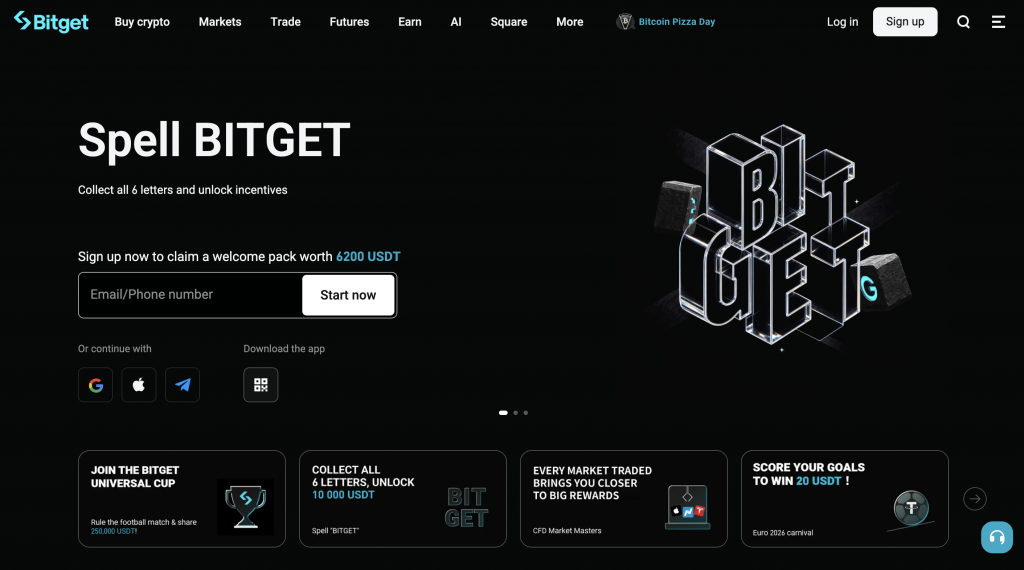
Bitget launched in 2018 and has grown into a major global exchange, holding multiple international licences and serving users in over 100 countries including New Zealand. The platform’s 1,300+ coin selection is the largest in this review by a significant margin, and competitive fees of approximately 0.10% sit well below Coinbase and Kraken for active traders. Bitget maintains a $300 million Protection Fund, a self-insurance reserve the platform uses to compensate users in the event of security incidents — a feature Kraken, CEX.IO, and Coinbase do not match with an equivalent cash reserve. NZ users access spot trading with card deposits, though NZD pairs are not available.
Key Features
Bitget’s 1,300+ coins give NZ traders access to emerging altcoins well beyond the catalogues of Kraken (290+), CEX.IO (310+), or Coinbase (200+). Copy trading is a platform-native feature that lets users replicate the trade positions of other verified traders — a functionality not present on Kraken, CEX.IO, or Coinbase. Fees of approximately 0.10% are among the lowest in this review, making Bitget cost-competitive for NZ traders who execute frequently. The $300 million Protection Fund operates as a reserve for user compensation, adding a layer of financial backstop beyond standard cold storage practices. Proof-of-reserves publication adds transparency to the platform’s asset management.
Bitget Pros and Cons
Bitget delivers the widest coin selection and lowest fees among the exchanges reviewed here, alongside a unique copy trading feature for NZ users who want to follow experienced traders. The trade-off is a shorter operating history compared to Kraken or Coinbase.
Pros:
- 1,300+ coins — largest selection in this review
- Low fees: ~0.10% per trade
- $300 million Protection Fund for user security
- Copy trading available on the platform
- Multiple international regulatory licences
Cons:
- Newer brand with shorter track record compared to Kraken (2011) or Coinbase (2012)
- No NZD trading pairs
- Interface has more features to navigate than Coinbase or CEX.IO
Why Choose Bitget
New Zealand traders focused on altcoins will find Bitget’s 1,300+ coin selection the most comprehensive option available in this review. The 0.10% fee structure keeps trading costs low, and the copy trading feature gives less experienced users a way to observe and replicate strategies from verified traders. The $300 million Protection Fund provides a financial safety net that goes beyond what most exchanges formalise in writing.
Bitget is a strong fit for NZ users who have moved past basic Bitcoin and Ethereum purchases and want access to a broader market. For first-time buyers, the interface has more features to navigate than Coinbase or CEX.IO. For active, altcoin-focused NZ traders, Bitget’s combination of coin depth, low fees, and copy trading makes it a serious contender.

FAQ
What is the best crypto exchange in New Zealand?
The best exchange for a NZ user depends on what they need most. Independent Reserve is the top choice for NZD bank transfers and local currency trading pairs. Kraken and CEX.IO serve NZ users well for broad coin selection and lower fees on global platforms. Coinbase suits beginners, and Bitget suits altcoin-focused traders. No single exchange covers every requirement — NZD access, coin breadth, fee level, and security track record all point toward different platforms.
Is crypto legal in New Zealand?
Crypto is legal in New Zealand. The Inland Revenue Department (IRD) treats crypto-assets as property for tax purposes, meaning gains and income from crypto activity may be taxable depending on the nature of the transactions. IRD has published guidance on crypto taxation, and NZ adopted the Crypto-Asset Reporting Framework (CARF) on April 1, 2026, requiring exchanges to report user transaction data to Inland Revenue.
Can I buy crypto with NZD?
Yes. Independent Reserve supports NZD deposits via local NZ bank transfers and offers NZD trading pairs, making it the most direct NZD path. Global platforms like CEX.IO and Kraken accept Visa and Mastercard deposits from NZ-issued cards, which converts fiat at the card provider’s rate. SWIFT wire transfers in USD are also available on CEX.IO and Kraken for users who prefer bank-to-bank transfers.
What is CARF and how does it affect NZ crypto traders?
CARF stands for Crypto-Asset Reporting Framework, an OECD standard that New Zealand formally adopted on April 1, 2026. Under CARF, exchanges serving NZ users must collect identity and transaction data and report it to Inland Revenue. This applies to both local platforms and foreign platforms with NZ customers. For traders, the practical effect is that crypto transaction history flows directly to IRD, parallel to how bank interest income is reported.
Do I pay tax on crypto in New Zealand?
Crypto is taxable in New Zealand. IRD treats crypto-assets as property, and income derived from trading, selling, or mining crypto may be subject to income tax. Whether a gain is taxable often depends on the intent at the time of acquisition and the nature of the activity. IRD has published specific guidance on this topic. This article does not constitute tax advice — NZ users should consult IRD’s published resources or a qualified tax adviser for their specific situation.
Is CEX.IO available in New Zealand?
Yes. CEX.IO operates in New Zealand and maintains a dedicated NZ page at cex.io/en-NZ. Spot trading is available for NZ users, and card deposits using Visa or Mastercard work from New Zealand. SWIFT international wire transfers are also supported. NZD direct bank transfers and NZD trading pairs are not available on CEX.IO.
What is the safest crypto exchange in New Zealand?
Exchange safety depends on several measurable factors: regulatory compliance, cold storage practices, two-factor authentication, and proof-of-reserves. Kraken publishes proof-of-reserves and has operated without a major security breach since 2011. CEX.IO holds 40+ global licences and uses cold storage for the majority of user funds. Independent Reserve is AUSTRAC registered and CARF compliant. Coinbase holds strong global compliance credentials. No exchange eliminates risk entirely — users should enable 2FA, use strong passwords, and only deposit what they intend to trade.
What payment methods work for New Zealand crypto buyers?
Independent Reserve accepts NZD bank transfers directly from NZ bank accounts, making it the most NZD-friendly option. On global platforms like CEX.IO, Kraken, and Bitget, Visa and Mastercard card deposits work from NZ-issued cards and settle quickly. SWIFT international wire transfers are available on CEX.IO and Kraken for users who prefer bank transfers in USD. Coinbase also accepts card deposits from NZ users.