
Don’t invest unless you’re prepared to lose all the money you invest. This is a high-risk investment and you should not expect to be protected if something goes wrong. Take 2 mins to learn more.
Educational Notice: This article is provided purely for informational and educational purposes. It does not constitute financial, investment, or legal advice, nor does it represent an offer, solicitation, or recommendation to trade digital assets or register with CEX.IO.
Choosing a crypto exchange is an important decision for UK residents. FCA registration under the Money Laundering Regulations applies to platforms serving users in the United Kingdom, and users can verify any platform’s status in the FCA’s public register. From January 2026, CARF reporting applies, so exchanges serving UK users must collect and report user transaction data to HMRC, and every trade on a registered platform leaves a record. Crypto is a high-risk, volatile investment, and crypto-assets sit outside the Financial Services Compensation Scheme (FSCS), so the exchange you choose and the way it manages custody and security affect your exposure. This guide reviews four platforms serving UK users: Kraken, Coinbase, Gemini, and OKX. It compares features, payment methods, and coin selection.
UK Crypto Exchanges
| Exchange | Suited For | Key Characteristics | Payment Methods (UK) |
|---|---|---|---|
| Kraken | Experienced traders, OTC | Advanced order types, proof-of-reserves reporting | GBP bank transfer, card |
| Coinbase | First-time users | Streamlined interface, Learn & Earn programme | GBP bank transfer, card |
| Gemini | Users who prioritise documented custody | Insurance-backed custody, ActiveTrader interface | GBP bank transfer, card |
| OKX | Altcoin variety, Web3 tools | Large coin selection, built-in Web3 wallet | Card, crypto deposit |
Kraken
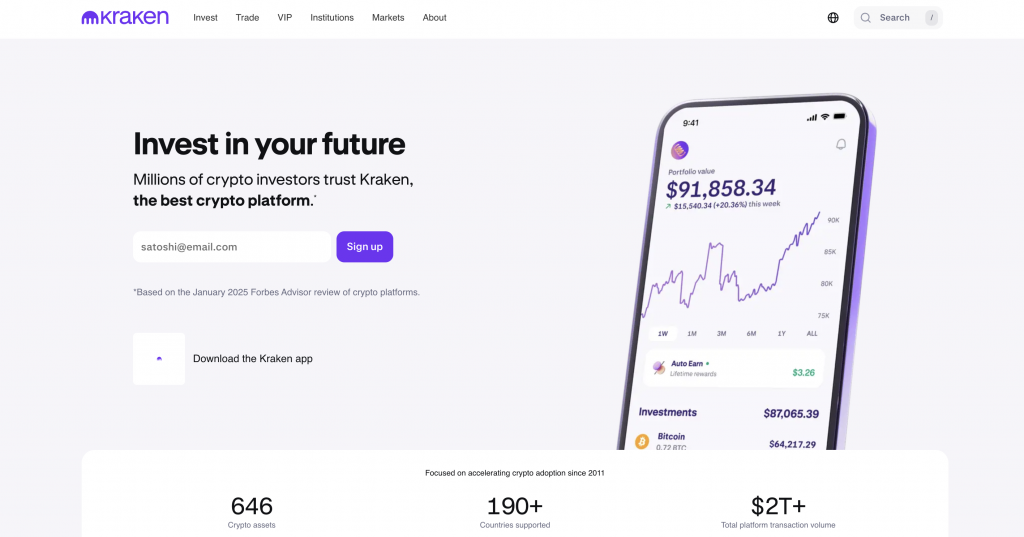
Kraken has served UK users since 2014. The platform lists hundreds of cryptocurrencies and supports over-the-counter (OTC) trading for larger transactions. Kraken publishes proof-of-reserves data, which gives users independent verification of the assets it holds.
Key Features
Kraken’s feature set covers Spot Trading, Kraken Pro for advanced order types, and OTC services for institutional or high-volume traders. GBP deposits arrive via bank transfer through Kraken’s own banking infrastructure. Entry-level fees sit at the competitive end of the market. Proof-of-reserves audits give UK users an external check on Kraken’s asset holdings. Margin trading on Kraken is unavailable to standard UK retail clients under FCA rules, and access requires qualifying as a high-net-worth or sophisticated investor.
Kraken Pros and Cons
Kraken pairs a long history in the UK market with reserve reporting and direct GBP infrastructure.
Pros:
- Long UK market presence, serving UK users since 2014
- Hundreds of coins with an OTC desk for large trades
- Proof-of-reserves reporting for user verification
- Direct GBP banking infrastructure
- Competitive entry-level fees
Cons:
- Margin trading restricted to qualifying UK clients under FCA rules and unavailable for standard retail users
- No PayPal support for UK deposits
- Interface carries a steeper learning curve for new users
Why Choose Kraken
Kraken suits UK traders who value a long market track record. Advanced users get Kraken Pro’s full order-type toolkit, including stop-limit and iceberg orders. OTC services handle large orders without moving the market price, which helps high-volume buyers. Proof-of-reserves data lets users independently check that Kraken holds the assets it reports, a transparency step that goes beyond self-reporting.
Coinbase
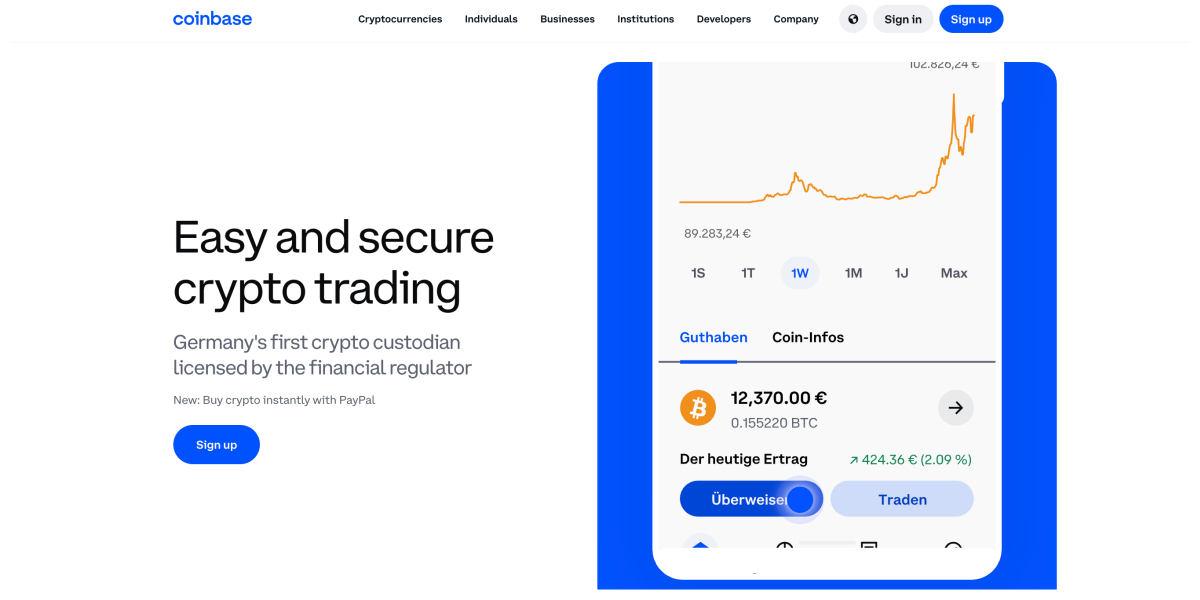
Coinbase is a widely recognised cryptocurrency platform with a UK presence aimed at new users. UK users can access a broad selection of cryptocurrencies alongside GBP bank transfers, card deposits, and a Learn & Earn programme that distributes small amounts of crypto for completing educational modules. The platform is aimed at first-time users and uses a streamlined interface. Coinbase also operates Coinbase Advanced Trade, a separate interface for users who want more detailed charting and order types.
Key Features
Coinbase keeps its main interface streamlined. Users can buy, sell, and view a portfolio from the main screen. GBP deposits arrive via bank transfer, and card purchases are also supported. The Learn & Earn programme distributes small amounts of crypto for watching educational content. Entry-level fees sit at the higher end among the platforms reviewed here. Advanced Trade provides limit orders, stop orders, and more granular charting for users who outgrow the basic interface.
Coinbase Pros and Cons
Coinbase’s characteristics are its recognised brand and a design aimed at new users, which makes it a starting point for first-time buyers.
Pros:
- Streamlined interface aimed at new users
- Broad selection of cryptocurrencies
- Learn & Earn programme distributes small amounts of crypto for educational engagement
- GBP bank transfers and card deposits supported
- Coinbase Advanced Trade available for more experienced users
Cons:
- Entry-level fees sit at the higher end among the platforms on this list
- Smaller coin selection than several platforms on this list
- No margin trading for UK retail users
- Advanced tools live in a separate interface
Why Choose Coinbase
Coinbase suits UK users who are buying crypto for the first time and want a platform with a globally recognised brand. The interface is aimed at first-time users, and the Learn & Earn programme gives new users a low-stakes way to receive small amounts of crypto while learning how different assets work. Users who later want lower fees or more advanced trading tools can move to Coinbase Advanced Trade.
Gemini
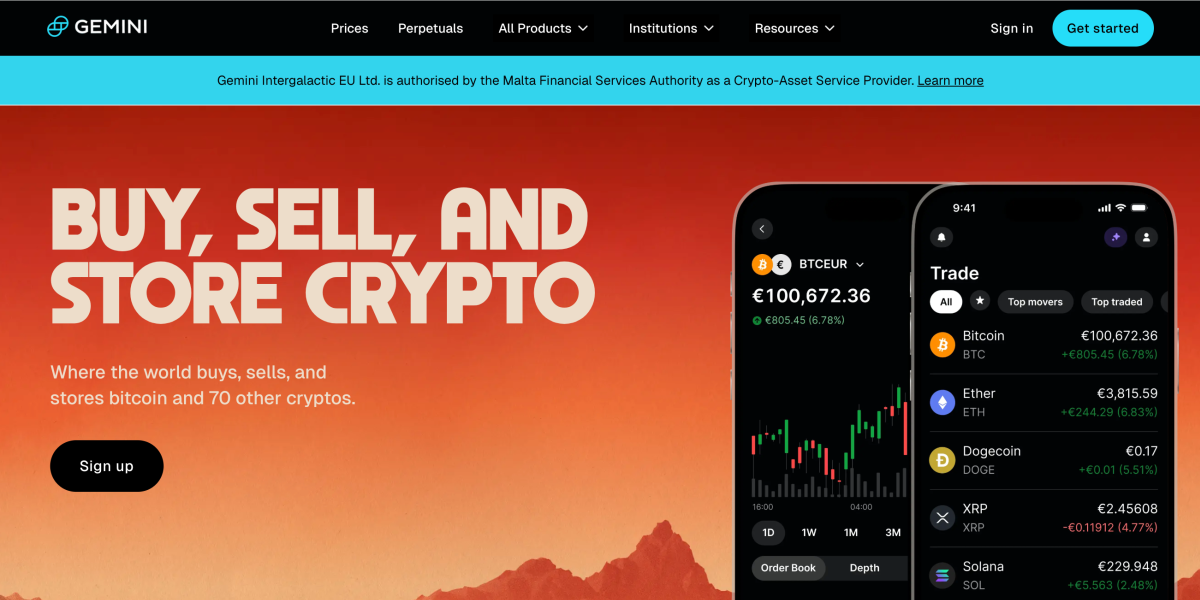
Gemini builds its product around a compliance-first approach and documents its custody and security practices. The platform supports a smaller selection of cryptocurrencies than the other exchanges on this list and uses insurance-backed custody on assets held on the exchange. Gemini’s ActiveTrader interface provides lower-fee limit orders relative to its standard convenience fees. The platform serves users who place documented custody above coin variety or low fees.
Key Features
Gemini’s custody structure uses cold storage and carries insurance on digitally held assets, which is documented more formally than on most platforms on this list. ActiveTrader offers a separate interface with limit and stop orders and lower fees than the standard convenience rate. GBP bank transfers and card deposits support UK users at the point of purchase. The coin selection covers the major assets and lists fewer altcoins than the other platforms here. The platform’s compliance history and SOC 2 Type 2 certification suit users who prioritise documented controls.
Gemini Pros and Cons
Gemini’s documented custody and insurance standards define its position on the security axis. For users who hold larger amounts on-exchange and want documented coverage, Gemini’s structure is explicit.
Pros:
- Insurance-backed custody on on-exchange assets [verify current terms]
- ActiveTrader interface for lower-fee limit orders
- Documented compliance and security records
- GBP bank transfers and card deposits supported
Cons:
- The narrowest coin selection on this list
- Standard convenience fees sit at the higher end among the platforms here
- No margin trading product for UK users
- Limited altcoin access relative to the other exchanges on this list
Why Choose Gemini
Gemini suits UK users who hold larger amounts on an exchange and want documented insurance coverage. The platform’s compliance record and SOC 2 Type 2 certification provide independent verification of its internal controls. ActiveTrader reduces fee costs for users comfortable placing limit orders. Gemini fits a specific profile: a user who holds a smaller number of major assets, values formal custody documentation, and uses limit orders to manage costs.
OKX
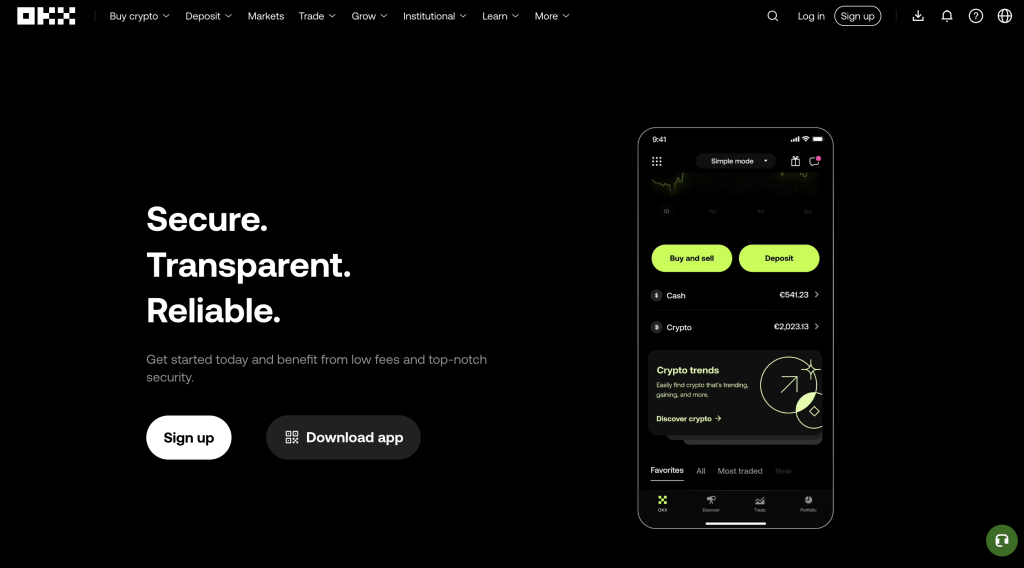
OKX lists a large coin selection, alongside a DEX integration and a built-in Web3 wallet for users who want direct access to decentralised protocols. The platform serves traders with low spot fees and a broad range of products. OKX’s Web3 tools connect centralised trading with DeFi and NFT access in one interface. UK users can deposit via card or crypto transfer.
Key Features
OKX offers Spot Trading and Earn products under one account, with additional products subject to UK eligibility rules. The coin selection covers major assets and a large range of lower-cap altcoins that mainstream platforms do not list. Entry-level spot fees sit at the low end of the market. The Web3 wallet connects to DeFi protocols directly from the OKX app, which gives users access to liquidity pools and token swaps within the platform. GBP-specific payment infrastructure is less developed than Kraken’s, so UK users primarily deposit via card or crypto.
OKX Pros and Cons
OKX gives UK users a wide coin selection and low entry-level spot fees. Its Web3 integration makes it a relevant option for users engaged with decentralised protocols.
Pros:
- One of the larger cryptocurrency selections on this list
- Low entry-level spot fees
- DEX integration and built-in Web3 wallet
- Earn products alongside spot trading
Cons:
- Interface depth makes it less suitable for beginners
- GBP-specific payment support (Faster Payments, Online Banking) is less developed than Kraken’s
- High volume of products and options increases the learning curve
Why Choose OKX
OKX suits UK traders who want wide altcoin access and low transaction costs. The Web3 wallet and DEX integration make OKX a practical tool for users who move between centralised trading and decentralised protocols. A user can buy on OKX and bridge directly to a DeFi protocol within the same application. OKX suits experienced users who already know what they want and need the inventory and fee structure to execute it.
FAQ
Which crypto exchanges are FCA registered in the UK?
FCA registration under the Money Laundering Regulations means an exchange has registered with the Financial Conduct Authority and met its anti-money-laundering and counter-terrorism financing requirements. Registration covers AML compliance. Full FCA authorisation covers a broader set of consumer protection and conduct standards, and the two are separate statuses. Regulatory statuses change over time, so users should check the FCA’s public register for the current status of any platform before opening an account.
Is crypto covered by the FSCS in the UK?
No. Crypto-assets sit outside the Financial Services Compensation Scheme. The FSCS protects deposits held in FCA-authorised banks and certain investment products, and cryptocurrency falls outside that scope. If an exchange becomes insolvent, UK users cannot claim compensation through the FSCS. Some exchanges document cold storage practices, proof-of-reserves reporting, or custody insurance. These provide platform-level protections, and none of them substitute for the formal FSCS safety net.
Do I need to pay tax on crypto in the UK?
HMRC treats cryptocurrency as a capital asset. Capital Gains Tax applies when you dispose of crypto by selling, trading, gifting, or spending it. Income Tax applies when you receive crypto as payment for work or through certain earning programmes. From January 2026, CARF (Crypto-Asset Reporting Framework) reporting requires exchanges serving UK users to collect and submit user transaction data to HMRC automatically [verify effective date]. HMRC receives transaction records without users needing to self-report every trade to the exchange. This is not tax advice. For specific obligations, consult HMRC’s published guidance or a qualified tax adviser.
How is crypto exchange security assessed in the UK?
Exchange security rests on several factors: cold storage of user assets, two-factor authentication (2FA), transparent reserve reporting, and documented custody insurance. Kraken publishes proof-of-reserves data for independent verification. Gemini holds insurance-backed custody on digitally stored assets. No storage method removes all risk, and users should verify each platform’s current security documentation directly.
What are the crypto reporting requirements for UK users in 2026?
CARF, the Crypto-Asset Reporting Framework, became effective for the UK from January 2026. Under CARF, exchanges operating in the UK must collect user identification data and report transaction records to HMRC. This applies to UK tax residents using UK-serving platforms. HMRC uses this data to cross-reference against tax returns and identify unreported gains. UK crypto users remain responsible for calculating and reporting their own tax obligations through Self Assessment. CARF reporting by exchanges supplements HMRC’s ability to verify accuracy and does not replace the individual’s reporting duty. For full guidance, refer to HMRC’s official cryptocurrency tax pages.