
In the rapidly changing digital asset market, longevity can be one sign of operational consistency. Bitstamp, founded in 2011, is one of the longest-running cryptocurrency exchanges. While some platforms focus on expanding product ranges and higher-risk trading tools, Bitstamp has built its reputation around regulatory compliance, custody practices, and a more selective approach to asset listings.
Following its acquisition by Robinhood in 2025, Bitstamp entered a new phase of platform development. In 2026, it continues to serve European customers while maintaining a more limited presence in the United States. This review examines Bitstamp’s features, fees, and overall user experience in the current market environment.
Platform Overview: Regulation and Operational Structure
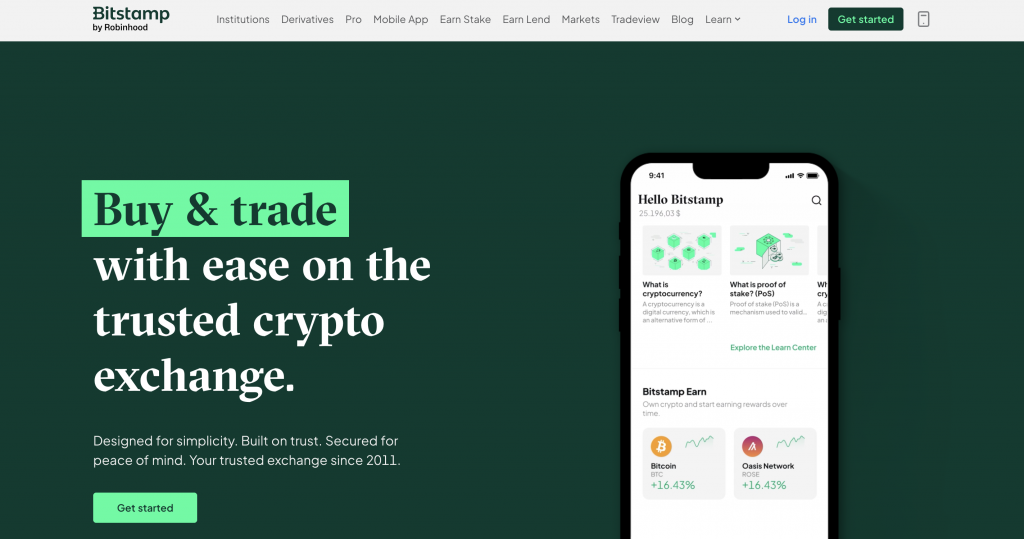
Bitstamp’s position in 2026 reflects its long operating history and regulatory focus. The platform has obtained approvals in multiple jurisdictions, including the New York BitLicense and authorization under the MiCA framework in the European Union.
For many users, this contributes to Bitstamp’s reputation as an established exchange. The platform generally does not prioritize newly launched low-capitalization assets or complex derivatives products. Instead, it provides exchange services designed around transparency, regulatory oversight, and custody arrangements.
For individuals researching bitcoin purchases or exploring cryptocurrency exchange services offered by long-standing providers, Bitstamp’s operating model may be relevant as part of a broader market comparison.
Core Features & Modern Trading Environments
Bitstamp separates its platform into two interfaces designed for different experience levels: Bitstamp Basic and Bitstamp Pro. This structure allows users to access either a simplified purchase interface or a more advanced interface with additional charting and order tools.
Bitstamp Basic vs. Bitstamp Pro: The Evolution of Trading
In 2026, users can move between the simplified purchase interface and the more advanced exchange interface within the same platform.
- Bitstamp Basic: This interface is designed primarily for retail users. It uses a simplified buy-and-sell process and removes most advanced charting features. For users seeking a more streamlined purchase flow, this interface focuses on basic transaction functionality. Transactions through the Basic interface generally use spread-based pricing rather than the maker-taker fee structure applied on the Pro interface.
- Bitstamp Pro: Previously known as Tradeview, this interface includes TradingView charting tools, real-time order books, and several order types, including trailing stops, OCO orders, and limit orders. It is also the section of the platform where a large share of exchange liquidity is concentrated, which may be relevant when comparing execution tools and exchange fee structures.
Earn and Staking in 2026
Many cryptocurrency platforms provide staking and lending services for eligible users. Bitstamp’s Earn program allows eligible participants to access staking for Ethereum (ETH) and Cardano (ADA).
- Staking Rates: At the time of writing, Bitstamp lists an estimated APY of around 3.10% for ETH and 1.00% for ADA. These figures are determined by the underlying proof-of-stake networks and may change over time.
- Lending: Bitstamp also offers a lending service for certain supported digital assets. Availability depends on asset support, eligibility requirements, and regional limitations.
- Regional Restrictions: Staking services are not available in the United States, Canada, Singapore, or Japan. Lending services are unavailable in the United States, the United Kingdom, Canada, and Singapore.
Bitstamp for Institutions: API and Connectivity
Bitstamp has long served large-volume market participants. Its FIX and HTTP APIs support algorithmic trading and automated execution workflows. The exchange also provides account management support for larger clients, along with sub-account tools commonly used by firms managing multiple trading entities.
User Interface: Desktop and Mobile Performance
The 2026 version of the Bitstamp mobile app includes a broader set of features than earlier versions. It brings many of the Pro dashboard tools into a mobile-oriented layout.
- Biometric Security: Face ID and fingerprint login are supported on compatible devices.
- Portfolio Tracking: Users can view holdings across supported digital assets and fiat balances.
- App Switcher: Users can move between the Basic and Pro interfaces within the app.
- Notifications: The app supports alerts for price movements and order activity. For users who prefer larger screens and more detailed chart analysis, the desktop version may still be more practical. The mobile app, however, includes enough functionality for routine account activity and order management.
While the desktop version remains the gold standard for deep technical analysis, the mobile app is more than capable of meeting the daily trading needs of most retail users.
Bitstamp Fees Explained: What You Actually Pay
Understanding Bitstamp fees explained is useful for anyone looking to better understand trading costs. Bitstamp uses a volume-based maker-taker fee model. A Maker provides liquidity by placing an order that is not immediately filled, while a Taker removes liquidity by matching an existing order.
Trading Fees (30-Day Volume)
| Monthly Volume (USD) | Maker Fee | Taker Fee |
| $10,000 | 0.20% | 0.30% |
| $100,000 | 0.10% | 0.20% |
| $500,000 | 0.06% | 0.18% |
| $1,500,000 | 0.06% | 0.16% |
| $5,000,000 | 0.03% | 0.12% |
Fees are calculated based on a user’s 30-day trading volume across all pairs and are applied at the time of order execution.
Deposit and Withdrawal Methods
Bitstamp offers a variety of ways to deposit and withdraw funds. The speed and cost vary significantly depending on the method and your geographic location.
Payment Methods for Global Customers
| Method | Buy | Sell | Deposit | Withdraw | Speed | Fee |
| Bank Account (ACH) | ✔ | ✔ | ✔ | ✔ | 1–2 Business Days | Free |
| SEPA (EU) | ✔ | ✔ | ✔ | ✔ | 1–3 Business Days | Free (Dep) / €3 (With) |
| Debit/Credit Card | ✔ | ✘ | ✘ | ✘ | Instant | 4.00% |
| Wire Transfer | ✔ | ✔ | ✔ | ✔ | 2–5 Business Days | 0.05% (Min $7.50) |
| PayPal | ✔ | ✘ | ✘ | ✘ | Instant | 4.00% |
| Apple/Google Pay | ✔ | ✘ | ✘ | ✘ | Instant | 4.00% |
Analytical Note: Instant purchases with cards or mobile wallets may be convenient, but the 4% fee is materially higher than that for many bank-transfer methods. Users comparing funding methods may want to review the total transaction cost before proceeding.
Security and Compliance: Custody Practices and Oversight
When people ask, “Is Bitstamp safe?”, discussions often reference the platform’s long operating history and its focus on compliance and custody practices. Following a security incident in 2015, Bitstamp revised its internal systems and has not reported a similar large-scale platform breach since then.
Key Security Protocols:
- Cold Storage: Bitstamp states that more than 95% of customers’ digital assets are stored in offline, multi-signature wallets.
- Insurance: The platform reports carrying crime insurance related to certain losses arising from security breaches of its systems.
- SOC2 Type 2 & Audits: Bitstamp reports SOC 2 Type 2 compliance and external reviews of internal controls and reserves.
- Whitelisting: Users can enable address whitelisting to limit withdrawals to pre-approved wallet addresses.
- Regulatory Supervision: Licensing by the NYDFS and authorization under MiCA place Bitstamp within formal reporting and capital oversight frameworks.
Asset Selection: Quality Over Quantity
As of 2026, Bitstamp supports more than 100 digital assets globally, with a smaller list available to U.S. residents. While some exchanges list a much larger number of tokens, Bitstamp takes a more selective approach.
Bitstamp states that it reviews digital assets before listing them on the platform. A more selective listing process may limit exposure to newly launched or thinly traded assets. The exchange supports major assets such as Bitcoin (BTC), Ethereum (ETH), XRP, Solana (SOL), and Cardano (ADA), as well as a smaller set of established DeFi and Layer-2 tokens. Users seeking access to a broader range of recently launched assets may find that other exchanges offer a wider listing base.
Customer Support and Reliability
Customer support remains an important point of comparison across exchanges. Bitstamp offers 24/7 phone support alongside an email ticketing system, which is less common among crypto platforms:
- Responsiveness: Reported email response times in 2026 are typically within 12 to 24 hours.
- Human Element: Direct access to a support representative may be useful during account reviews or payment-related issues.
- Reliability: Bitstamp has historically maintained a relatively consistent service record during periods of market volatility, although exchange performance can vary during peak activity.
Bitstamp Pros & Cons
| Pros | Cons |
| High Regulatory Standards: One of the most compliant exchanges globally. | High Fees for Instant Buys: 4% for cards, and PayPal is expensive. |
| Excellent Security: Proven track record with cold storage and insurance. | Limited Asset Selection: Fewer “altcoins” compared to competitors. |
| Entry-level trading: fees begin at 0.30% maker and 0.40% taker for volumes under $10,000. | Verification process: Identity checks can take time, depending on the volume of document reviews. |
| Institutional Liquidity: Commonly used by large-volume traders. | Restricted Features in the U.S.: Staking and lending are limited by region. |
Comparing Alternatives: How CEX.IO Compares
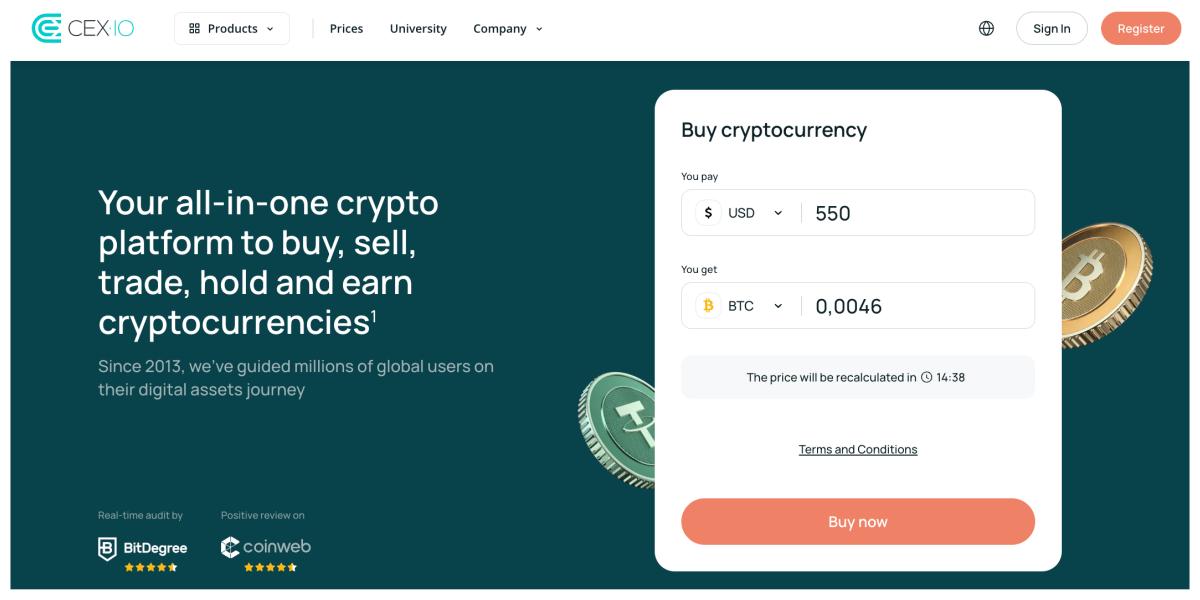
When comparing Bitstamp with other regulated exchanges that support fiat payments, CEX.IO presents a different platform structure. While Bitstamp focuses on a narrower asset list and a traditional exchange model, CEX.IO includes a broader ecosystem with Instant Buy, spot trading, margin trading (available in select countries only), Earn features, and integrated wallet services.
The platform also supports multiple payment methods and a wider selection of digital assets. As a result, the two exchanges differ mainly in ecosystem scope, payment accessibility, and product availability.
Final Verdict: Who Should Choose Bitstamp?
Bitstamp remains one of the longest-running exchanges in the digital asset sector. Its emphasis on regulatory compliance, custody practices, and a conservative listing strategy continues to attract users who prioritise operational history and a structured trading environment.
For institutions or users who value a traditional exchange model with a limited asset list, Bitstamp may be a suitable platform. Platforms such as CEX.IO offer a different structure, including additional payment methods, a broader product ecosystem, and a wider range of supported assets while operating within regulated environments.
FAQ
How trustworthy is Bitstamp?
Bitstamp is one of the longest-operating cryptocurrency exchanges. Founded in 2011, it has operated through multiple market cycles while maintaining a focus on regulatory compliance and custody practices. It holds licenses in several jurisdictions, including the New York BitLicense. While no centralized exchange is free from risk, Bitstamp’s use of cold storage, external controls, and insurance arrangements contributes to its reputation as an established platform for users focused on compliance and operational history.
Is Bitstamp safe?
Bitstamp is generally viewed as a long-established exchange with a strong emphasis on account protection and custody practices. The platform reports that most customer funds are held offline in multi-signature cold wallets. It also supports user-side measures such as two-factor authentication and address whitelisting. While the 2015 incident remains part of its history, Bitstamp reimbursed affected users and has not reported a similar large-scale platform breach since then.
Is Bitstamp free to use?
Bitstamp is not entirely free to use. For users with lower 30-day trading volumes, certain fee tiers may be relatively low, while higher-fee services such as card purchases and some withdrawals can increase total costs. Opening an account and funding it via certain bank transfer methods may incur lower charges than with instant purchase methods. Users should review the current fee schedule before completing transactions.
Is WhiteBIT better than Bitstamp?
WhiteBIT and Bitstamp serve somewhat different user preferences. Bitstamp is often associated with greater emphasis on regulation, a strong operating history, and a more selective listing model. WhiteBIT may be more relevant for users seeking a larger asset range and access to additional trading features. The most suitable platform depends on factors such as region, feature access, and preferred trading interface.
Is Bitstamp legal in the US?
Yes, Bitstamp is legal in the United States and operates through Bitstamp USA, Inc., which is registered as a Money Services Business with FinCEN. It also holds the New York BitLicense. However, service and feature availability can vary by state, so users should review local availability before registering.
What is the difference between Bitstamp Basic and Bitstamp Pro?
The main difference is the interface and pricing structure. Bitstamp Basic is designed for users who prefer a simplified buy-and-sell flow, while Bitstamp Pro offers advanced order types, depth charts, and technical indicators. Pro transactions typically follow the maker-taker fee model, which may result in lower trading costs than spread-based purchases on the Basic interface.
Is it hard to withdraw from Bitstamp?
Withdrawals from Bitstamp are generally straightforward once an account has completed verification. The platform supports fiat withdrawals via ACH, SEPA, and wire transfer, depending on the region. Processing times vary by method, while digital asset withdrawals depend on blockchain confirmation times and network conditions.
Is Bitstamp considered to be good for beginners?
Bitstamp can be suitable for beginners because its Basic interface removes much of the complexity associated with advanced trading terminals. Users can access a simpler buy-and-sell flow without having to switch to detailed charts or advanced order tools. Minimum trade sizes are also relatively accessible on supported pairs.
Why is Bitstamp so popular among long-term market participants?
Bitstamp’s long operating history is a major reason it remains well known among long-term market participants. The platform has operated through multiple market cycles while keeping its focus on compliance, exchange services, and custody practices rather than rapidly expanding into every new product category.
What is the difference between Bitstamp and a private wallet?
Bitstamp is a custodial platform, which means the exchange manages account access, custody systems, and recovery processes. A private wallet is self-custody, meaning the user controls the private keys directly. Custodial platforms may offer convenience and account recovery processes, while self-custody gives the user direct control but also places full responsibility for backup and recovery on the wallet owner.
Does Bitstamp report to the IRS (and other tax authorities)?
Yes. As a regulated exchange, Bitstamp is required to comply with applicable tax-reporting obligations in jurisdictions where it operates. In the United States, this includes reporting requirements tied to digital asset transactions. In the European context, reporting obligations may also apply under relevant cross-border information-sharing frameworks. Users should consult local tax guidance when reviewing exchange-generated records.
How long does the account verification process take?
Bitstamp is known for a relatively detailed KYC process. For many users, initial identity verification can be completed quickly through automated checks, while higher verification levels may require manual review of supporting documents. Processing times can vary depending on submission quality and review volume.
Can I use Bitstamp on my mobile device?
Yes. Bitstamp offers mobile apps for both iOS and Android. The app includes access to both the Basic and Pro interfaces, along with features such as biometric login, price alerts, and account tracking. For users who want to manage account activity away from a desktop device, the mobile app provides access to most routine exchange functions.
Disclaimer: For information purposes only. Not investment or financial advice. Seek professional advice. Digital assets involve risk. Do your own research.