Accessing cryptocurrency does not always begin with a bank transfer or trading interface. Some platforms focus on bridging physical cash and digital assets, and Coinme is one of the most established names in that space.
Founded in 2014, Coinme operates a US-focused crypto service that connects users to digital assets through retail locations, debit card payments, and a mobile app. Its network spans tens of thousands of physical locations, allowing users to convert cash into cryptocurrency without relying entirely on traditional banking rails.
That said, this accessibility comes with trade-offs. Fees tend to be higher than those on full-service exchanges, and the platform focuses primarily on basic buy-and-sell functionality rather than advanced trading tools.
In this review, we break down how Coinme works, what fees you can expect, its supported features, and how it compares to more comprehensive platforms like CEX.IO.
What Is the Coinme Platform?
Coinme is a US-based cryptocurrency service that focuses on making digital assets accessible through both physical and digital channels. Founded in 2014, it operates as a licensed money transmitter and is registered with FinCEN, supporting activity across most US states.
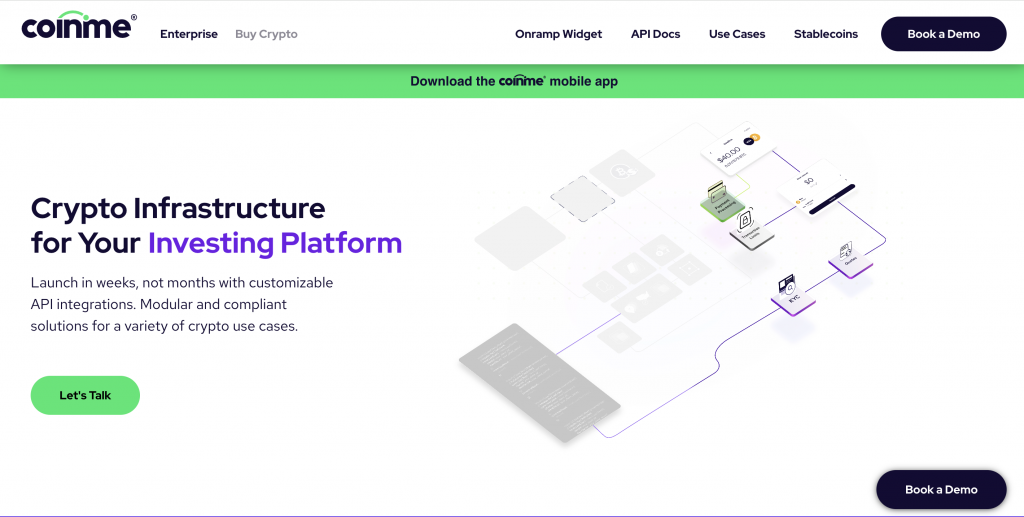
The platform allows users to buy and sell cryptocurrency with cash at retail locations and via debit card payments in its mobile app. Alongside its consumer-facing tools, Coinme also provides Crypto-as-a-Service infrastructure, enabling fintech companies to integrate fiat-to-crypto functionality into their own products.
Key Features of Coinme
Coinme is built around accessibility and simplicity, with a focus on bridging traditional payment methods and cryptocurrency.
Buying Crypto with Cash
One of Coinme’s defining features is its nationwide retail network. Users can convert physical cash into cryptocurrency at Coinstar kiosks and participating stores using a barcode system. This reduces reliance on bank accounts and provides a familiar, in-person payment flow.
Buying Crypto with a Debit Card
The mobile app supports instant crypto purchases with Visa and Mastercard. After completing verification, users can link a card and complete transactions within minutes. Pricing, including fees and spreads, is shown before confirmation, which helps users understand the total cost upfront.
Selling Crypto for Cash
Coinme provides a built-in custodial wallet within its app, allowing users to store, send, and receive crypto without external tools. Security features include two-factor authentication, identity verification, and cold storage for the majority of funds, alongside ongoing transaction monitoring.
Supported Cryptocurrencies
Coinme supports a relatively small selection of digital assets compared to full-service exchanges. At the time of writing, users can access around 10 to 11 cryptocurrencies, including Bitcoin (BTC), Ethereum (ETH), Solana (SOL), XRP, Dogecoin (DOGE), Litecoin (LTC), Chainlink (LINK), Polygon (MATIC), Stellar (XLM), and USDC.
This focused offering may suit beginners who prefer a simplified choice, but it limits exposure to newer or niche assets. Unlike broader platforms, Coinme does not provide access to hundreds of markets or advanced trading pairs, keeping its scope centered on widely recognized cryptocurrencies.
Coinme Fees and Costs
Coinme’s pricing structure differs from traditional exchanges, as it relies on spreads and service fees rather than volume-based trading fees. Cash purchases at retail locations typically include a spread of around 5 %, plus a flat transaction fee in the range of $2.95 to $4.74.
Debit card purchases also include a spread, with the total cost displayed before confirmation. While this pricing model is transparent at checkout, overall costs tend to be higher than those on platforms with tiered fee structures, particularly for users making frequent or larger transactions.
Payment Methods and Accessibility
Coinme supports a limited but distinct set of payment methods focused on accessibility. Users can buy cryptocurrency with cash at tens of thousands of retail locations across the United States, including Coinstar kiosks and partner stores.
Debit card payments (Visa and Mastercard) are also available through the mobile app, enabling near-instant purchases. However, the platform does not offer a broad range of bank transfer methods commonly found on exchanges.
Availability is restricted to the United States, with services supported in most states, which may limit access for international users.
Security and Regulation
Coinme operates within a defined US regulatory framework, which may provide a level of oversight compared to unregistered platforms. It is registered with the Financial Crimes Enforcement Network (FinCEN) as a Money Services Business and holds money transmitter licenses in most US states, with ongoing compliance requirements such as reporting and audits.
From a security perspective, Coinme uses standard safeguards, including two-factor authentication (2FA), identity verification procedures, and cold storage custody for the majority of customer funds. Transaction monitoring is also in place to help detect suspicious activity.
As with any crypto platform, users should remain aware that transactions are typically irreversible and asset values can fluctuate.
Coinme Crypto-as-a-Service (CaaS)
Beyond its consumer app, Coinme offers a Crypto-as-a-Service (CaaS) platform designed for fintechs, wallets, and financial institutions. This API-first infrastructure allows partners to integrate fiat-to-crypto and crypto-to-fiat functionality directly into their own products without building backend systems from scratch.
The service includes modular components such as KYC onboarding, payment processing, liquidity access, custody solutions, and transaction monitoring. This setup enables businesses to launch crypto-related features more quickly while relying on Coinme’s compliance framework and settlement infrastructure. As a result, CaaS is positioned more as a backend solution for enterprises rather than a feature aimed at everyday retail users.
Pros and Cons of Coinme
Coinme focuses on accessibility and simplicity, but that approach comes with clear trade-offs. Below is a quick breakdown of where the platform performs well and where it may fall short depending on user needs.
Pros
- Strong cash access network
- Simple onboarding
- Fast transaction processing
- Regulated US presence
Cons
- Higher fees vs exchanges
- Limited crypto selection
- US-only availability
- No advanced trading features
Coinme vs Other Platforms: Crypto Dispensers and CEX.IO
Each platform approaches crypto access differently, from cash-based services to full-service exchanges. The differences become clearer when you compare fees, payment methods, and available features side by side.
Coinme vs Crypto Dispensers
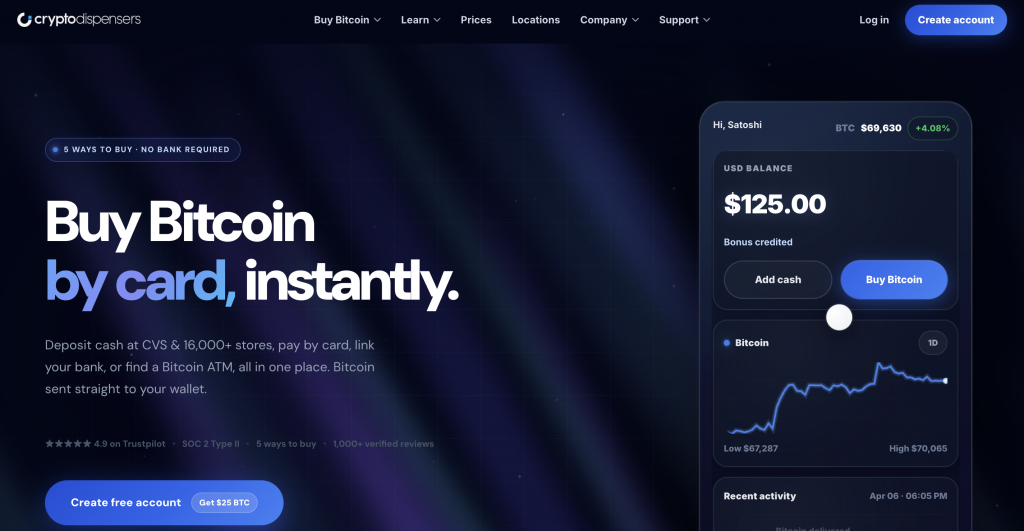
Coinme and Crypto Dispensers both focus on cash-to-crypto access, but their infrastructure differs. Coinme operates 40,000+ retail locations through Coinstar and store partnerships, while Crypto Dispensers relies more on Bitcoin ATMs and voucher-based systems. Coinme supports around 10–11 assets, whereas Crypto Dispensers typically focus primarily on Bitcoin.
Fees are comparable, often including spreads of around 5% or higher, depending on the method. Coinme also offers debit card purchases via its app, but Crypto Dispensers does not consistently support them.
However, Crypto Dispensers may provide more flexible identity thresholds for smaller transactions, depending on jurisdiction.
Coinme vs CEX.IO
Coinme focuses on cash and simple purchase flows, while CEX.IO provides a broader crypto ecosystem. CEX.IO supports 100+ markets, compared to Coinme’s ~10 assets. Payment methods on CEX.IO include Visa, Mastercard, bank transfers such as ACH and SEPA, and digital wallets, whereas Coinme mainly supports cash and debit cards.
Fee structures also differ. Coinme applies spreads of around 5% plus flat fees for cash transactions, while CEX.IO uses a tiered spot trading fee starting at 0.25 % that decreases with volume. CEX.IO also offers features such as spot trading, a crypto converter, and a mobile app with integrated account management tools.
Coinme vs Crypto Dispensers vs CEX.IO: Feature Comparison
The table below highlights how these platforms differ across core areas such as fees, payment methods, and functionality.
| Feature | Coinme | Crypto Dispensers | CEX.IO |
| Supported Assets | ~10–11 cryptocurrencies | Primarily Bitcoin | Primarily Bitcoin |
| Payment Methods | Cash, debit card | Cash, ATMs, vouchers | Cards, bank transfers, e-wallets |
| Fees | ~5% spread + $2.95–$4.74 (cash) | Typically high spreads (ATM-based) | From 0.25% (spot trading tiers) |
| Availability | US (48 states) | US-focused | Global (subject to region) |
| Mobile App | Yes | Limited / varies | Yes (iOS & Android) |
| Advanced Features | No trading tools | No trading tools | Yes (iOS & Android) |
Who Coinme Is Best For?
Coinme may suit users who prioritize physical access to cryptocurrency over advanced platform features. Its cash-to-crypto network, with 40,000+ retail locations, can be relevant for individuals without consistent access to banking services or those who prefer in-person transactions. The mobile app and debit card support also provide a straightforward way to purchase crypto without navigating trading interfaces.
However, its limited asset selection, higher transaction costs, and lack of trading tools mean it may be less suitable for users who want broader market access, lower fees, or more control over execution. In those cases, platforms with expanded functionality may be more appropriate.
Final Verdict: Is Coinme Worth It?
Coinme delivers a specific type of service, accessible crypto purchases through cash and simple app-based flows. For users who value that accessibility, especially in the US, it can serve a clear purpose. That said, the trade-offs are evident in pricing, asset availability, and feature depth.
Users who need access to 100+ markets, lower fee structures starting at 0.25% for spot trading, and multiple funding methods, such as bank transfers, cards, and e-wallets, may find platforms like CEX.IO more suitable. CEX.IO also provides tools such as spot trading and a crypto converter, which are not available on Coinme.
FAQ
Is Coinme safe to use?
Coinme operates as a FinCEN-registered Money Services Business and holds money transmitter licenses across most US states. It uses security measures such as two-factor authentication, cold storage custody, and transaction monitoring. While these controls are standard, users should still consider the general risks associated with cryptocurrency transactions and storage.
What is Coinme used for?
Coinme primarily allows users to buy and sell cryptocurrency with cash or a debit card. It also provides a custodial wallet within its mobile app, allowing users to store and transfer supported assets. The platform focuses on simple access rather than trading or advanced portfolio management tools.
How do I get my money from Coinme?
Users can convert cryptocurrency back to cash using Coinme’s ReadyCode ATM network, where available. After initiating a sale in the app, a code is generated and used to withdraw cash at supported locations. Coinme does not typically support direct withdrawals to bank accounts.
How much are Coinme fees?
Coinme fees vary depending on the method used. Cash transactions typically include a spread of around 5% plus a flat fee between $2.95 and $4.74. Debit card purchases also include a spread, with the total cost displayed before confirming the transaction in the app.
Is Coinme a Bitcoin wallet?
Coinme includes a custodial wallet within its mobile app that supports Bitcoin and several other cryptocurrencies. Users can store, send, and receive assets directly in the app. However, it does not provide full self-custody control, as private keys are managed by the platform.
Can I link my bank to Coinme?
Coinme does not typically support direct bank account linking for deposits or withdrawals. Instead, it focuses on cash payments at retail locations and debit card purchases within the app. This distinguishes it from exchanges, like CEX.IO, that offer ACH, SEPA, or wire transfer funding methods.
Where is Coinme based?
Coinme is based in the United States, with its registered address in Seattle, Washington. It operates primarily in the US market and holds money transmitter licenses in most states, allowing it to provide regulated cryptocurrency services to eligible users.
Does Coinme require ID?
Yes, Coinme requires identity verification to comply with KYC and AML regulations. Users must provide personal information during account setup, and verification is typically completed before accessing core features such as buying or selling cryptocurrency through the platform.
Can I send Bitcoin from Coinme to another wallet?
Yes, users can send Bitcoin and other supported cryptocurrencies from their Coinme account to external wallets. Transactions are processed on-chain, and network fees may apply depending on blockchain conditions. Users should verify wallet addresses carefully before confirming transfers.
Is Coinme a wallet?
Coinme includes a custodial wallet in its mobile app. Users can store, send, and receive supported cryptocurrencies within the app. Coinme controls the private keys, so users do not manage direct ownership of their assets. This setup means users rely on the platform for access and security.