
LocalMonero was a peer-to-peer marketplace where users bought and sold Monero (XMR) directly with each other. It stopped trading on May 14, 2024 and took its website down on November 7, 2024. Users who relied on it now search for LocalMonero alternatives, and this guide explains what LocalMonero was, why it closed, and which options exist today.
The guide lists other options in short form and then covers CEX.IO in detail. CEX.IO is an exchange with verified accounts. It does not list Monero and does not run a peer-to-peer marketplace, so the CEX.IO section states what it can and cannot do for former LocalMonero users.
What was LocalMonero?
LocalMonero was a Monero trading marketplace that launched in 2017 as the Monero counterpart of LocalBitcoins. The Block describes it as a platform where users bought and sold Monero directly with other users, both in person and online. Protos adds that the service relied on trader reputation, and it names Alex Daneo as a co-founder. CoinDesk reports that the parent company, AgoraDesk, also wound down.
The marketplace connected people who wanted XMR with people who sold it for bank transfers, cash or other payment methods. That model gave buyers a way to get Monero when large exchanges did not list it or did not serve their country.
What happened to LocalMonero?
On May 7, 2024, LocalMonero announced that it would close after almost seven years. The team cited a combination of internal and external factors and gave no specific reason. The platform disabled new signups and new advertisements at once, stopped all trades on May 14, 2024, and told users to withdraw their funds before November 7, 2024, when the website went offline. Funds left on the platform after that date could count as abandoned, according to FXStreet’s report.
Commentators linked the closure to pressure on privacy services at the time. Protos points to the criminal indictment of the Samourai Wallet co-founders and an FBI public service announcement about money transmitters that do not collect customer identification. LocalMonero did not confirm any of these links.
The closure also came while exchanges narrowed access to Monero. Binance delisted XMR in February 2024, and Kraken halted XMR trading and deposits for clients in the European Economic Area on October 31, 2024. Kraken’s notice cites regulatory changes.
What to look for in a LocalMonero alternative
LocalMonero users traded with strangers, so the first question is who holds the funds during a trade. Some platforms hold funds themselves, and others use a multisig escrow with security deposits, where the platform operator cannot move the coins alone. The second question is the payment method. Bank transfers and cards can reverse, which raises risk for sellers, so platforms set limits and rules around them.
Liquidity decides whether a trade completes at a fair price. Smaller markets have fewer offers and wider spreads. Technical requirements also differ: some options need a desktop app and the Tor network, while exchanges and wallet apps run in a browser or on a phone. The last question is legal status. Rules for privacy coins and for services without identity checks differ by country, so users check local law before they pick a route.
LocalMonero alternatives at a glance
The table lists the main routes that people name after the LocalMonero shutdown. Each has its own risks, and the facts below reflect public reports as of November 2026.
| Option | Type | What to know |
|---|---|---|
| Haveno and RetoSwap | Non-custodial peer-to-peer protocol built for Monero | Runs over Tor on a desktop app. Reports describe an exploit on May 20, 2026 with losses of about 7,000 XMR (roughly $2.7 million) and a second exploit with a trading suspension on June 16 and 17, 2026. Sources disagree on whether trading resumed, so users check the current status first. |
| Bisq | Non-custodial peer-to-peer desktop app | Needs bitcoin for the security deposit and fees. Monero trades against bitcoin on its XMR market. Bisq never holds fiat, and each trade runs through a multisig escrow. |
| Kraken | Regulated exchange | Requires identity verification. Ended XMR trading and deposits for EEA clients in October 2024. Availability varies by country, so users check Kraken’s current asset list. |
| Instant swap services | Accountless swaps between coins | Quote a rate and pay out XMR to a wallet address. They run risk checks and can ask for verification or hold a flagged swap. |
| Cake Wallet | Wallet app with a built-in swap | Routes swaps through third-party providers, so the provider sets the limits and checks. |
| CEX.IO | Exchange with verified accounts | Requires identity verification. Does not list Monero and has no peer-to-peer marketplace. |
Other sites present themselves as LocalMonero successors. The coverage reviewed for this article does not confirm that any of them continues the original service, so users check the operator, the community reputation and the platform history before they deposit.
CEX.IO as a LocalMonero alternative
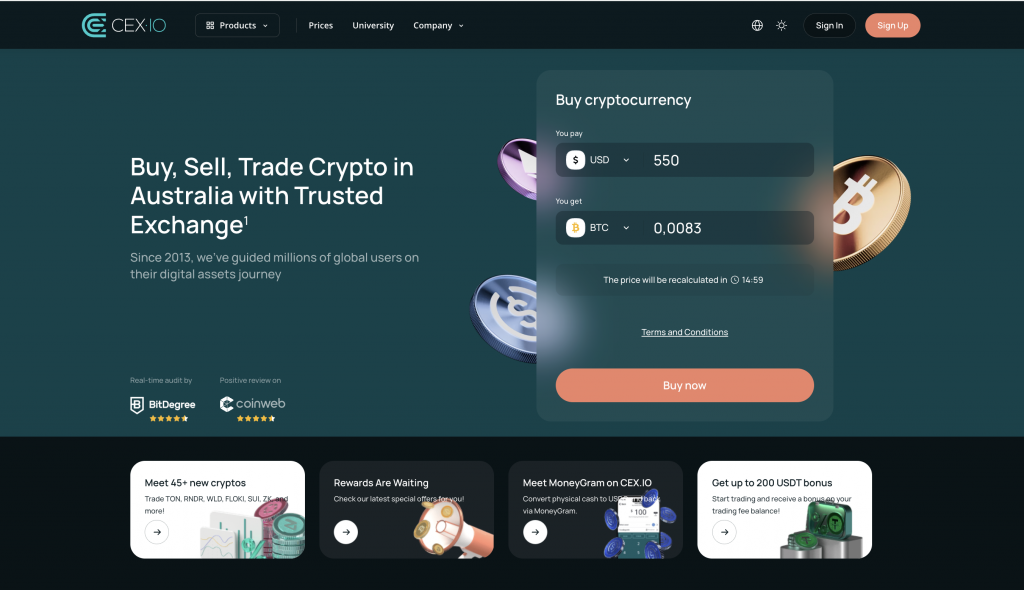
CEX.IO is a cryptocurrency exchange that started in 2013 and has over 15 million registered users. It offers spot trading, a Convert swap feature and fiat payment methods inside a verified account. CEX.IO does not list Monero and does not offer peer-to-peer trading, so it fits users who want a regulated platform for buying other crypto assets with fiat and does not replace LocalMonero itself. The availability of products, features and services on the CEX.IO platform is subject to jurisdictional limitations.
What CEX.IO does for former LocalMonero users
LocalMonero users often paid with bank transfers or cards to get crypto from a peer. CEX.IO covers the fiat side with a platform that has a named operator. The CEX.IO Monero page states that XMR is currently not listed and suggests buying other cryptocurrencies on CEX.IO and exchanging them for XMR on external platforms. Users who take that route follow the laws of their country and the terms of the external platform, and they accept that the second step falls outside CEX.IO.
Payment methods and fiat access
The CEX.IO Monero page lists Visa and Mastercard cards, SEPA and SWIFT bank transfers, PayPal, Skrill and Neteller, plus crypto deposits. Other CEX.IO pages also list Apple Pay and Google Pay, and PayPal for U.S. customers. Each method works only in certain countries, and the availability of payment methods on the CEX.IO platform is subject to jurisdictional limitations. Fees and limits differ by method, so users read the current figures on the Limits and Commissions page before they fund an account.
A named operator with registrations
LocalMonero connected strangers, and each trader carried the counterparty risk. CEX.IO operates under its own brand and holds FinCEN registration as a Money Service Business in jurisdictions where it has a licence to operate. According to the CEX.IO website, it also maintains more than 30 active money transmitter licences across the United States, and it follows local regulations in the countries where it operates. Registration does not remove market or platform risk, and users keep their own records of every transaction.
How CEX.IO Convert and spot trading work
Convert is the CEX.IO swap feature. The CEX.IO help article describes it as “anything-to-anything” swaps: crypto to crypto, crypto to fiat, and fiat to fiat. If no direct pair exists, Convert routes the swap through an intermediary currency that trades against both assets on CEX.IO. The final amount can differ from the estimate because the market moves while the order runs.
Users who prefer to set their own price can use spot trading. The Limits and Commissions page publishes a tiered fee schedule that starts at 0.25% for 30-day trading volume up to $10,000 and falls to 0.10% for volume up to $20 million. The help article does not state a Convert fee, and the app shows the swap details before the user confirms. Fees can change, so users check the page before they trade.
What CEX.IO does not offer
CEX.IO requires identity verification and does not offer anonymous trading. CEX.IO does not list Monero (XMR) and does not run a peer-to-peer marketplace with cash, gift card or in-person trades. The platform does not serve every country, and the Terms of Use list the restrictions. Users who need XMR directly use another platform and check its rules.
How to start on CEX.IO
The steps below describe the general flow. Exact screens and options depend on the user’s country.
- Create a CEX.IO account.
- Complete identity verification.
- Fund the account with a supported payment method or a crypto deposit.
- Search the markets list for the asset you want and confirm that it trades in your region.
- Place a spot order or use Convert, and review the details before you confirm.
- Withdraw the asset to your own wallet when you do not need it on the exchange.
How to spot fake LocalMonero sites
The original LocalMonero website went offline on November 7, 2024. Scammers copy defunct services, and search results can show sites with similar names and interfaces. Monero.how warns that impersonation sites rotate domains, clone interfaces and often appear through paid ads. No legitimate Monero service asks for a wallet seed or private keys. Users who want to try a platform check its history in independent community sources, start with a small trade, and type the address by hand and never click an ad.

FAQ
Is LocalMonero still working?
No. LocalMonero disabled trading on May 14, 2024 and took its website down on November 7, 2024. Sites that use a similar name do not show confirmed ties to the original team, so users treat them with caution.
What replaced LocalMonero?
No single service replaced it. People name Haveno-based networks such as RetoSwap and the Bisq desktop app for peer-to-peer trades, plus swap services and wallet apps for crypto-to-crypto routes. Each option has its own risks, and RetoSwap reported two exploits in 2026.
Is RetoSwap still working?
The reports reviewed for this article disagree. RetoSwap suspended trading after exploits of the Haveno protocol on May 20, 2026 and again on June 16 and 17, 2026, and sources differ on whether trading resumed afterward. Users check RetoSwap’s official channels for the current status before they trade.
Can you buy Monero on CEX.IO?
No. CEX.IO does not currently list Monero (XMR). Its Monero page suggests buying other cryptocurrencies on CEX.IO and exchanging them for XMR on external platforms. The availability of products on the CEX.IO platform is subject to jurisdictional limitations.
Is there a LocalMonero alternative without KYC?
Peer-to-peer tools such as Haveno-based networks and Bisq do not ask for identity documents by design, and accountless swap services can start without an account. Each carries its own risks, including exploits, scams and verification requests on flagged swaps. CEX.IO requires identity verification. Rules differ by country, so users check the local requirements before they pick a route.
Risk notice
The value of digital and virtual currencies comes from supply and demand in the global marketplace, which can rise or fall independently of any fiat or government currency. Holding digital and virtual currencies carries exchange rate and other types of risk. Transactions in virtual currency are irrevocable, and losses from fraudulent or accidental transactions may result in the loss of your money with no recourse. This article is educational and does not offer financial advice. Please refer to the Terms of Use for more details.